
Defense manufacturing automation: controlled data and part records
We build FANUC robot cells and custom machines in Fontana, CA. Our parent company, CalWest Manufacturing, is AS9100D and ISO 9001 certified and ITAR registered. This page covers what changes when the part is for a defense program.
- Parent company
- AS9100D and ISO 9001 certified, ITAR registered
- Work shown
- Automated tapping machine for an aircraft part; robotic drilling of 3D parts
- Robots
- FANUC only
- Records
- Every cycle and fault logged, time-stamped and searchable
- Built in
- Fontana, CA
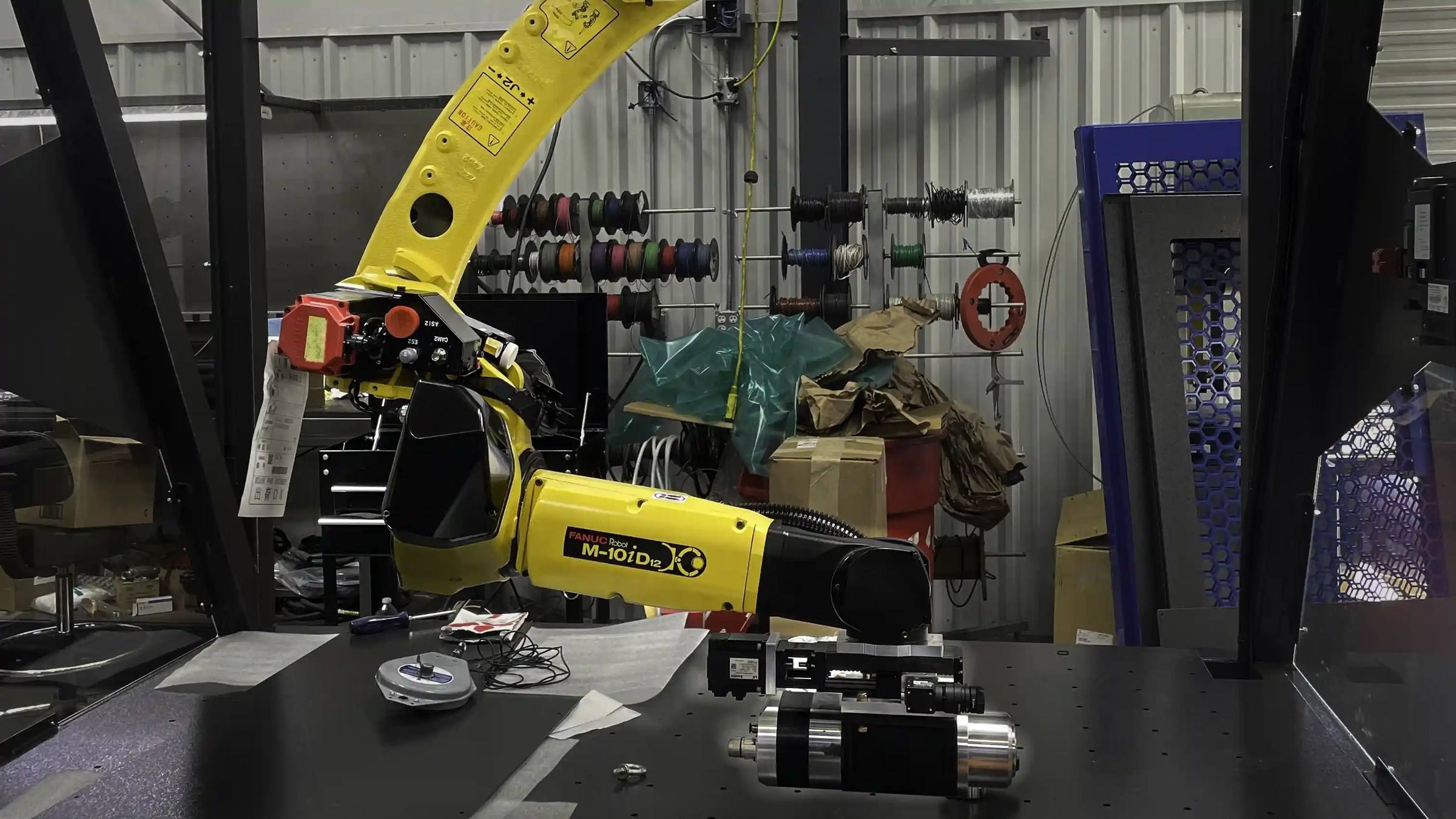
- Parent company
- AS9100D and ISO 9001 certified, ITAR registered
- Work shown
- Automated tapping machine for an aircraft part; robotic drilling of 3D parts
- Robots
- FANUC only
- Records
- Every cycle and fault logged, time-stamped and searchable
- Built in
- Fontana, CA
Defense manufacturing automation looks like any other automation on the floor: a robot loads a machine, drills a part or builds an assembly. The difference sits around the cell. The part’s drawings may be ITAR technical data or controlled unclassified information (CUI), the prime contract flows requirements down to whoever handles that data, and the customer often wants a record of what was done to each part. Those decide how the project runs before the first bracket is cut.
CalWest Robotics is the robotics division of CalWest Manufacturing, which is AS9100D and ISO 9001 certified and ITAR registered. We design, fabricate, wire and program our cells and machines in our own Fontana, CA shop. How to vet an automation company on certifications and comparable work is covered on aerospace automation companies. This page is about the data and the records on a defense job.
In short
Why the cell’s own files can carry controlled data
ITAR defines technical data as information required for the design, production, manufacture, assembly, operation, repair, testing, maintenance or modification of defense articles, including blueprints, drawings, photographs, plans, instructions and documentation (22 CFR 120.33). On an automation job, controlled information doesn’t stay in the part drawing. It ends up in the files the cell is built from:
- Fixture and nest models built from the part’s CAD
- Gripper fingers shaped to the part
- Vision setups trained on images of the part
- Robot programs whose points follow the part’s features, such as a drilled hole pattern
- Run-off photos and videos, and the test parts themselves
Whether any of these is technical data is a call for your export compliance officer, not the builder. It matters because releasing technical data to a foreign person inside the United States counts as an export (22 CFR 120.50). A fixture model in the wrong inbox, or a run-off video shown to the wrong visitor, can be an export problem without anything leaving the country.
Registration is a separate point. Under 22 CFR 122.1, anyone in the United States in the business of manufacturing or exporting defense articles, or furnishing defense services, has to register with the State Department, and the same section says registration does not confer any export rights or privileges.
Can a defense automation project start without controlled data?
-
Describe the job in general terms
Call or email with the material, rough size and weight, the operation and the volume. Leave controlled drawings, models and photos out of the first contact.
-
Work out what can move without controlled data
The robot choice, guarding, control panel and floor layout can often be sized from envelope dimensions, weights and rates alone.
-
Agree the handling before anything is sent
How controlled files are transferred and stored, who works with them, and what happens to every copy and test part at the end of the job. Your compliance officer approves it.
-
Plan the run-off
Decide where test parts, run-off photos and videos go, and whether your inspectors witness the run-off in our shop.
DFARS 7012, CUI and CMMC flowdowns
If your part data is covered defense information, DFARS 252.204-7012 applies. Contractor systems holding that information generally have to meet the NIST SP 800-171 requirements in effect when the solicitation was issued, and cyber incidents have to be reported to DoD within 72 hours of discovery. The clause flows down to subcontracts for operationally critical support or where subcontract performance will involve covered defense information.
CMMC sits on top of that. DoD’s CMMC program rule, 32 CFR part 170, took effect December 16, 2024, and the DFARS rule that puts CMMC requirements into contracts took effect November 10, 2025. Under the DFARS rule, CMMC requirements flow down to subcontractors that will process, store or transmit federal contract information or CUI in performing the subcontract.
In practice, tell us at the start whether your drawings are marked CUI and which clauses your contract flows down. That decides what can be sent, how, and whether parts of the design can go ahead on uncontrolled information.
Traceability: what the cell records
Defense customers often flow down record-keeping requirements, and a cell can produce those records as it runs instead of someone writing them up afterwards.
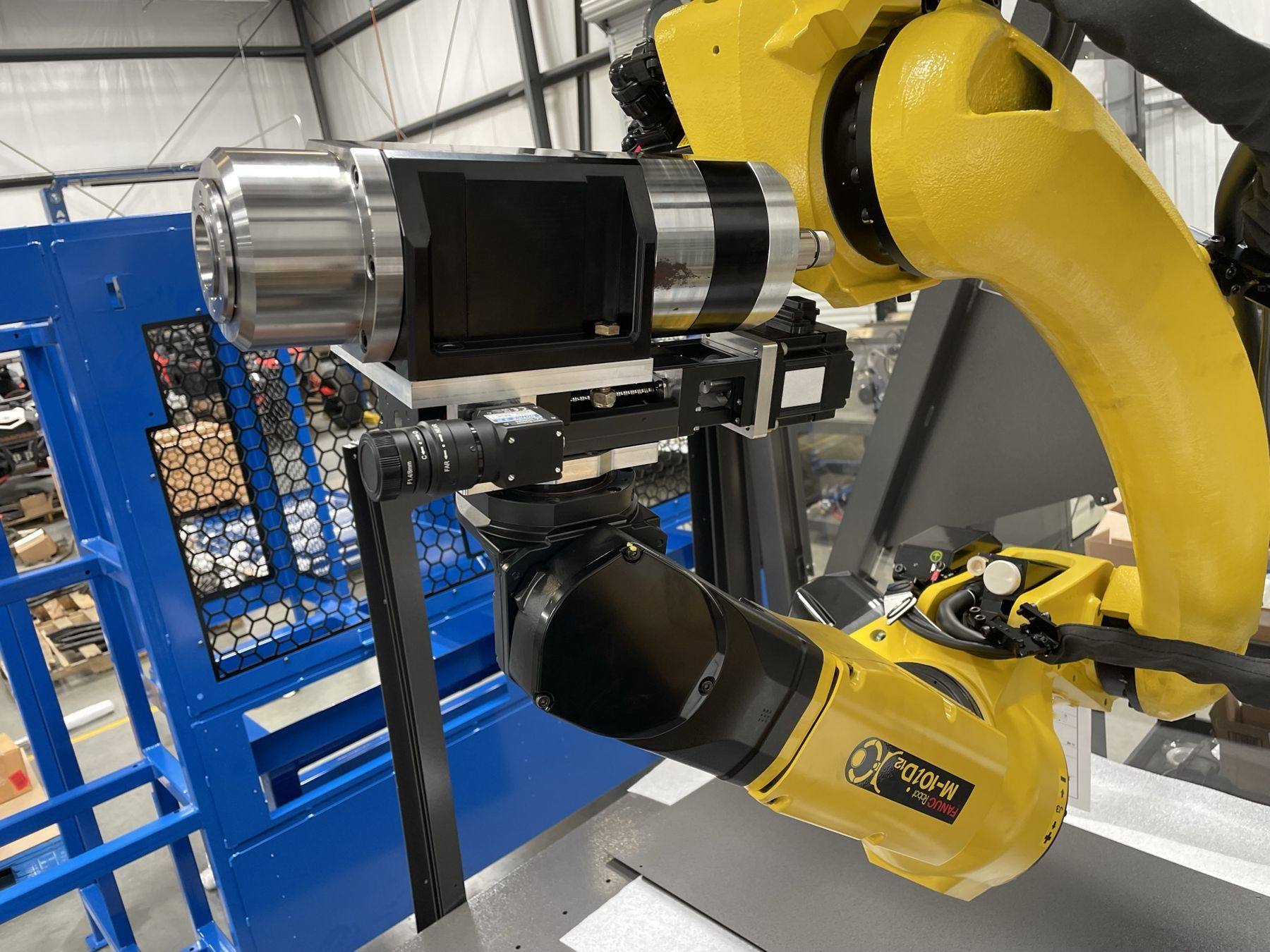
We write cell software that logs every cycle and fault, time-stamped and searchable, and posts counts, jobs and scrap to the ERP without re-keying. On our robotic drilling cell, a vision system verifies each drilled hole and logs quality data. Our machine monitoring page covers what to log and where the data lives.
Write the record requirements into the RFQ, because they shape the PLC program and the database:
- What is recorded for each part: serial or lot number, time, program revision, and the result of each check
- Where the records are stored, who can see them and how long they are kept
- How a program change is approved and logged, and how robot and PLC backups are labeled by revision
Work we can point to
Neither job below is described here as a defense program. Both are the kind of precision, repeatable work that defense parts call for.
- An automated tapping machine for an aerospace supplier. A custom feeder and tapping mechanism for high-volume production of an aircraft part, with PLC control of every mechanical function and an HMI for real-time monitoring. There is no robot in it. See the tapping machine write-up.
- Robotic drilling of complex 3D parts. A FANUC robot with a router head and tool changing, mounted inverted above a custom fixture table that holds parts aligned to the CAD model, with a calibration step and a vision check on every hole. See robotic drilling and milling.
Fixtures, guarding, bases and grippers for our cells are made in CalWest Manufacturing’s shop, with laser cutting, press brake forming, welding and 5-axis machining under the same roof as the cell build. Every cell is run off in our shop before it ships, and we install at plants anywhere in the US.
Handover documents to ask for
Any automation RFQ should list the handover package: as-built electrical schematics, the I/O list, PLC and HMI source files, a full backup of each FANUC controller and the vision setups. On a defense job, add a list of every file that contains part data, where each copy lives at the end of the project, and how test parts and leftover data are returned or destroyed.
What to send first (nothing controlled)
- The part in general terms: material, rough size and weight
- The operation: drilling, tapping, machine loading, assembly or something else
- How many parts, and over what period
- Whether the part data is ITAR-controlled or marked CUI (yes, no or not sure is enough)
- Quality and record-keeping requirements your customer flows down, if you know them
Other plants we have built for are listed on industries, and every application we build is on robot cells by application.
Common questions
- Is CalWest ITAR registered?
- Yes. Our parent company, CalWest Manufacturing, is registered with the State Department's Directorate of Defense Trade Controls under ITAR, and CalWest Robotics works out of the same Fontana shop. Registration is required of anyone in the US in the business of manufacturing or exporting defense articles, but it does not authorize any export by itself. Whether your part and its data are ITAR-controlled is for your export compliance officer to decide.
- Can you quote a cell without our controlled drawings?
- Usually far enough to know whether the job fits. A general description of the part, its material, rough size and weight, the operation and the volume tells us what kind of cell it is and roughly what goes into it. Fixtures and grippers need the real geometry later. Controlled drawings and models wait until the handling has been agreed with you and approved by your compliance officer.
- Do CMMC requirements apply to the company building our cell?
- It depends on whether that company will process, store or transmit federal contract information or CUI to do the work. Under DoD's CMMC rules, requirements flow down to subcontractors in that position, and DFARS 252.204-7012 flows down when subcontract performance will involve covered defense information. Your contracts team decides which clauses flow down, so settle it before any drawings are sent.
- Can the cell keep a record for each part or serial number?
- Yes, if it is designed in. We write cell software that logs every cycle and fault with a time stamp and keeps it searchable, and on our drilling cell a vision system verifies each drilled hole and logs the quality data. What is recorded per part, where it is stored and how long it is kept should be written into the RFQ, because it shapes the PLC program and the database.
- Which robots do you use for defense work?
- FANUC only. We are a FANUC Authorized System Integrator, and every robot cell we build uses FANUC robots. Models we have worked with include the LR Mate, M-10iD/12, M-20iD/25 and FANUC delta robots, with iRVision where the robot has to find the part. When a robot isn't the right answer, we also build custom machines, like the automated tapping machine we built for an aerospace supplier.
Sources
- eCFR: 22 CFR 120.33, Technical data (ITAR)
- eCFR: 22 CFR 120.50, Export (ITAR)
- eCFR: 22 CFR 122.1, Registration requirements (ITAR)
- DFARS 252.204-7012, Safeguarding covered defense information and cyber incident reporting
- Federal Register: Cybersecurity Maturity Model Certification (CMMC) Program, final rule, 32 CFR part 170 (October 15, 2024)
- Federal Register: DFARS, Assessing Contractor Implementation of Cybersecurity Requirements, final rule (September 10, 2025)