
Palletizing robots at the end of each packaging line in Temecula, CA
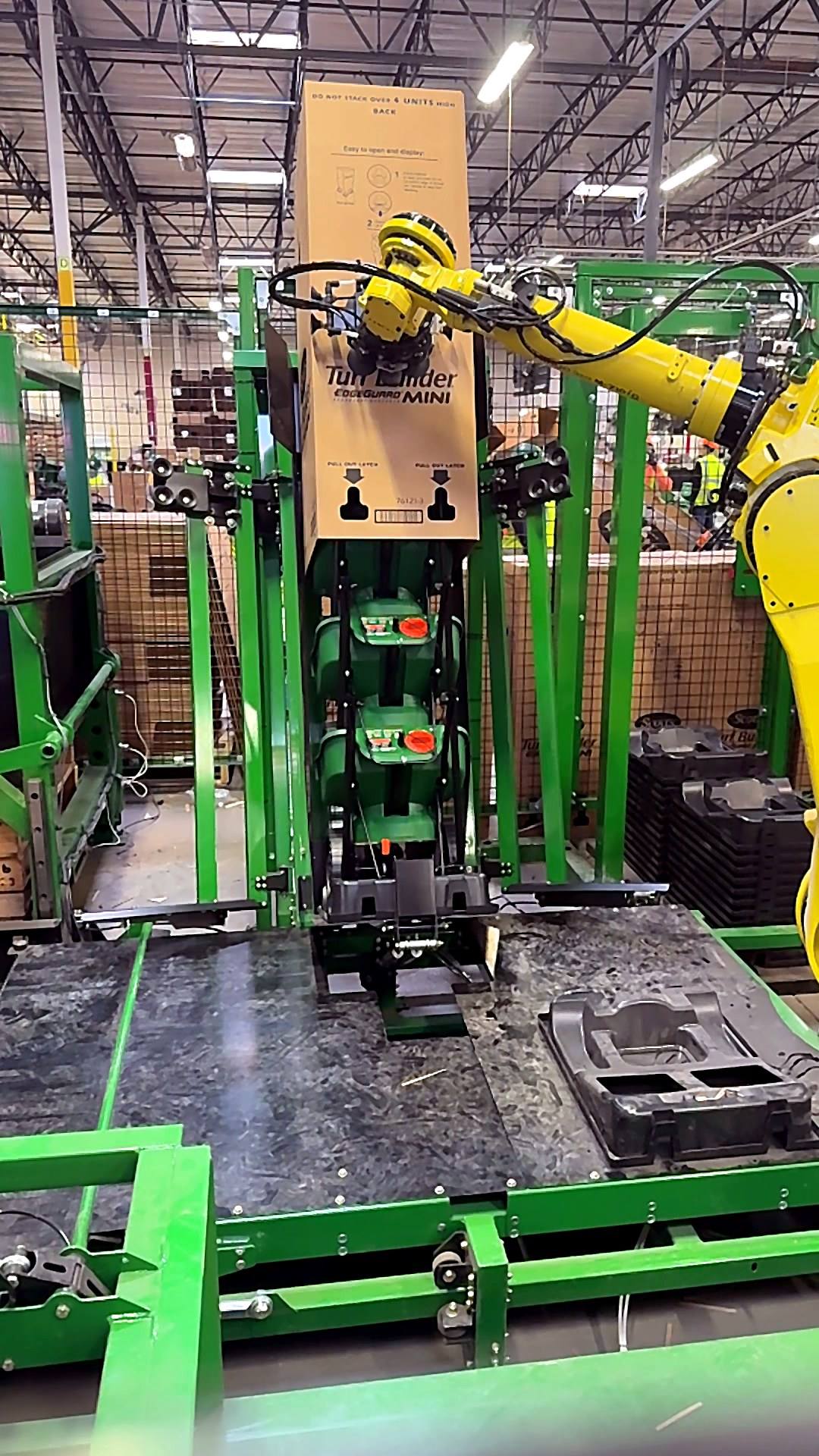
The plant belongs to a national lawn and garden brand, and FANUC robots stack every case it packs. We built the cells in our Fontana shop and commissioned them on the plant floor.
| Customer | A national lawn and garden brand |
|---|---|
| Location | Temecula, CA |
| Scope | Design, Fabrication, Wiring, Programming, Installation, Commissioning |
| Equipment | FANUC robots |
| Controls | Wired and programmed by CalWest in Fontana |
| Built | Fontana, CA. Commissioned on the plant's live production floor |
Every photo in this palletizing robot case study was taken in the cells on the plant floor in Temecula. If you are weighing gripper options, guarding layouts or cost for a line of your own, our robotic palletizing page covers those, and our guide to what drives the cost of a palletizer goes further on price.
The job: lawn and garden palletizing at the end of every line
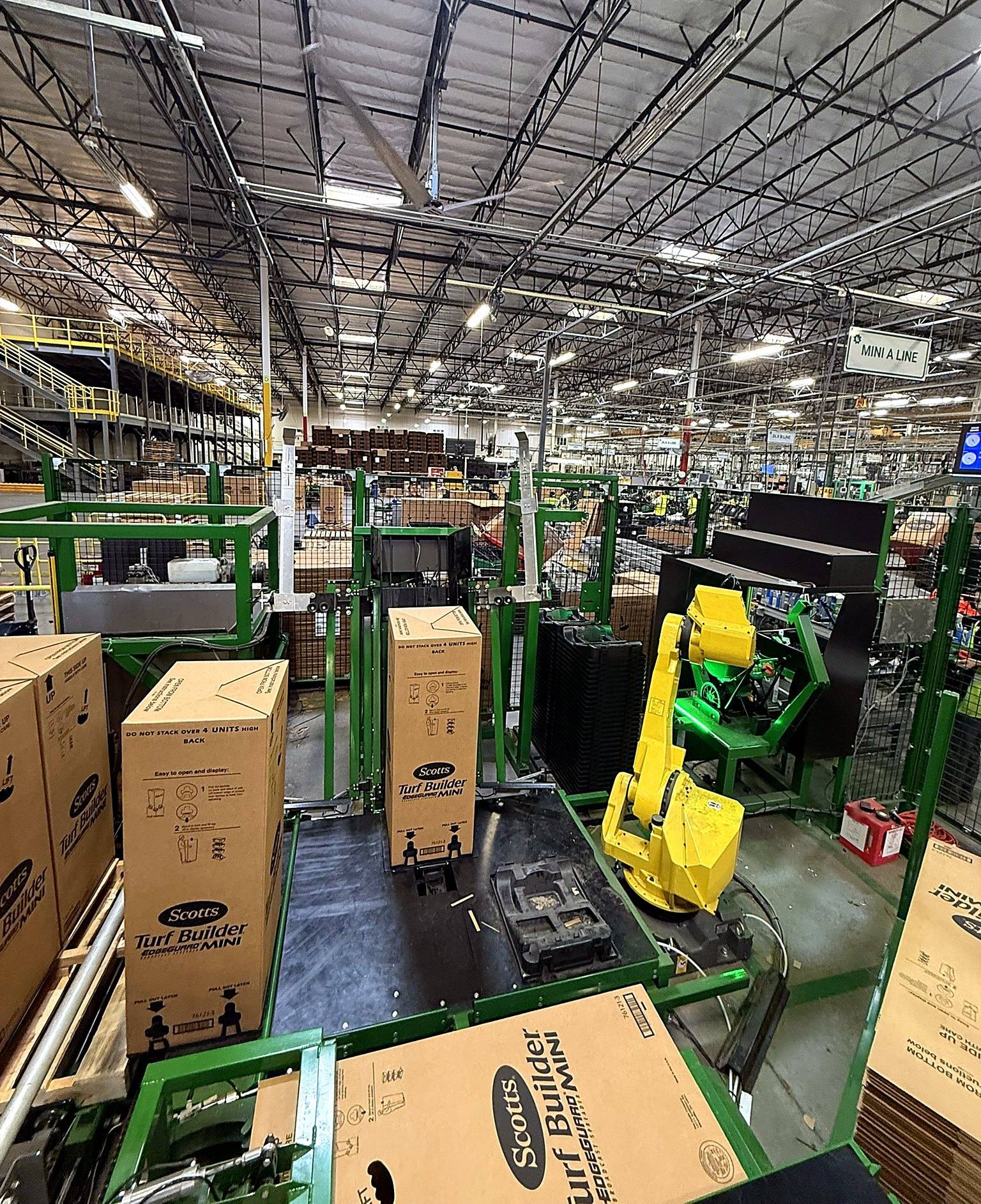
The cases in these photos are tall corrugated boxes, and they stand on end on the pallet (Fig. 2). A tall, narrow case has to come down square and be released cleanly, or it can lean into the case beside it. It is also turned and swung on the way, so the tool has to hold it firmly through the move without crushing the corrugated walls.
How the palletizing robot handles each case
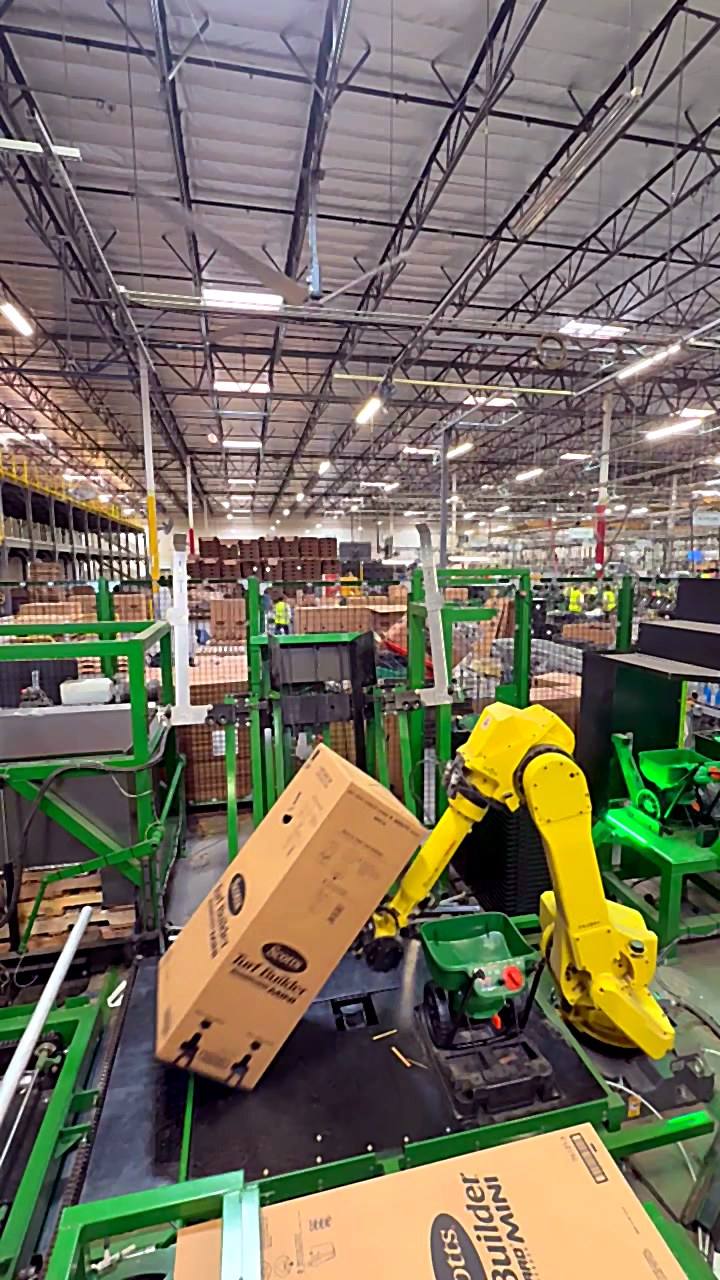
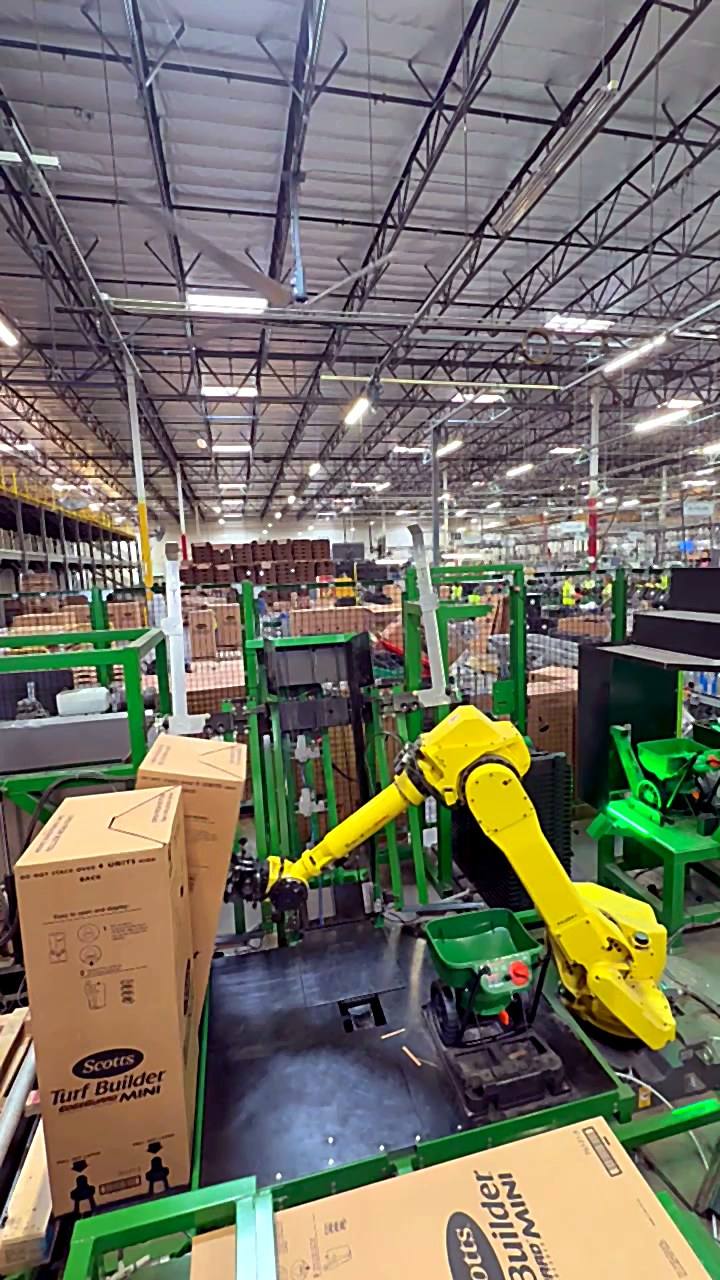
The sequence is the same for every case. The robot takes hold of the case as it comes off the packaging line and turns it. It swings the case across to the pallet (Fig. 3) and sets it down in its spot in the current layer (Fig. 4). When a layer is complete the next one starts, and so on until the pallet is built to the stack pattern.
The program also keeps count. It tracks cases and layers, works out where the next case goes, and has to know what to do when no case is waiting or the pallet is full. We set that logic up along with the rest of the robot program. Our FANUC robot programming page covers how we write and tune robot programs, and our guide to FANUC palletizing programming shows how pallet registers and stack patterns work on the controller.
How the cells were built
Everything except the install happened in our Fontana shop.
| Step | Where | What the step covers |
|---|---|---|
| Design | Fontana | The full cell, modeled and proven in SolidWorks |
| Fabricate | Fontana | Laser cutting, press brake forming, welding and 5-axis machining |
| Wire | Fontana | Control panels built and tested |
| Program | Fontana | The robot program and the cell’s control logic |
| Install | Temecula | Installed and commissioned on the plant’s live production floor |
The team that designed the cells also built the control panels and wrote the robot programs, so a question about any part of the cell goes to one place. We build every FANUC robot cell this way, and our how we work page lays out the steps. Temecula sits in our home region, covered on our page for Southern California plants.
Spray nozzle assembly cells at the same plant
We also built the LR Mate cells that assemble spray nozzles at this plant, at three guarded tables fed by bowl feeders. The spray nozzle assembly cells have their own write-up, and both jobs are covered from the plant’s side on our consumer products automation page.
Planning a palletizing cell for your line
If your line ends at a pallet that someone builds by hand, a phone video of the line end running at normal speed and a photo of a finished pallet for each stack pattern are enough for a first look. Case sizes and weights, the number of lines that end at a pallet and a rough sketch of the floor around the line end help us lay out the cell, and all of it can go with a project note. Other jobs we have built are written up the same way as this one.