
Turnkey FANUC robot cells, built and run off in our Fontana shop
The frame, guarding, control panel and code for every cell come from our own shop. This page covers what a cell from us includes, and the robotic automation cells we have built, sorted by what the robot does.
- Robots
- FANUC
- In-house
- Design, fabrication, panels, code
- PLCs
- Allen-Bradley, Siemens
- Built in
- Fontana, CA
- Robots
- FANUC
- In-house
- Design, fabrication, panels, code
- PLCs
- Allen-Bradley, Siemens
- Built in
- Fontana, CA
Our cells are built around FANUC robots, and what the robot does all day shapes the rest of the cell: stacking cases, assembling parts, picking off a moving belt, feeding machines, drilling 3D parts or moving heavy frames. We are the robotics division of CalWest Manufacturing and a FANUC Authorized System Integrator.
In short
The other way to buy automation is in pieces: a robot from one place, a frame from a fab shop, a panel from a panel builder, and a programmer to make them talk. Many integrators buy the frame, sub out the panel and hire someone else to write the code.
We do each of those steps here. Every handoff between shops is a place where two drawings can disagree. When a sensor bracket lands in the wrong spot, the fix touches the model, the bracket, the wiring and the code, and here the same team makes all four changes. If you are comparing integrators, our guide on how to choose a robot integrator lists the questions that show who builds what.
What a turnkey robot cell includes
The robots, controllers, cameras and safety devices come from their makers. The frame, guarding, tooling, panel and code that turn them into a cell are made and written here. The table lists each part of a cell from us and who makes it.
| Line item | What it is | Who does it |
|---|---|---|
| Cell design | The whole cell modeled in SolidWorks: robot, tool, frame, guarding, conveyors, panel and your parts, with reach and clearances checked before steel is cut | In-house |
| FANUC robot and controller | The arm, the controller and teach pendant, plus iRVision and iRPickTool when the job needs a camera or conveyor tracking | Made by FANUC; mounted, set up and programmed by us |
| End-of-arm tool | Machined fingers, vacuum heads or a larger custom tool, designed around your part | Designed in-house and machined on our 5-axis; suction cups and other catalog parts bought |
| Frame, base and guarding | Robot pedestal or riser, cell frame, guard panels and doors | Built in our shop; sheet parts laser-cut, bent and welded by CalWest Manufacturing, under the same roof |
| Part presentation | Conveyors, bowl feeders, trays and fixtures that bring parts to the robot and take them away | Fixtures and mounts made in-house; feeders and conveyors integrated by us |
| Safety | Risk assessment, interlocked doors, light curtains or scanners, and the safety logic that ties them to the robot | Devices bought from their makers; assessment, wiring and logic done in-house |
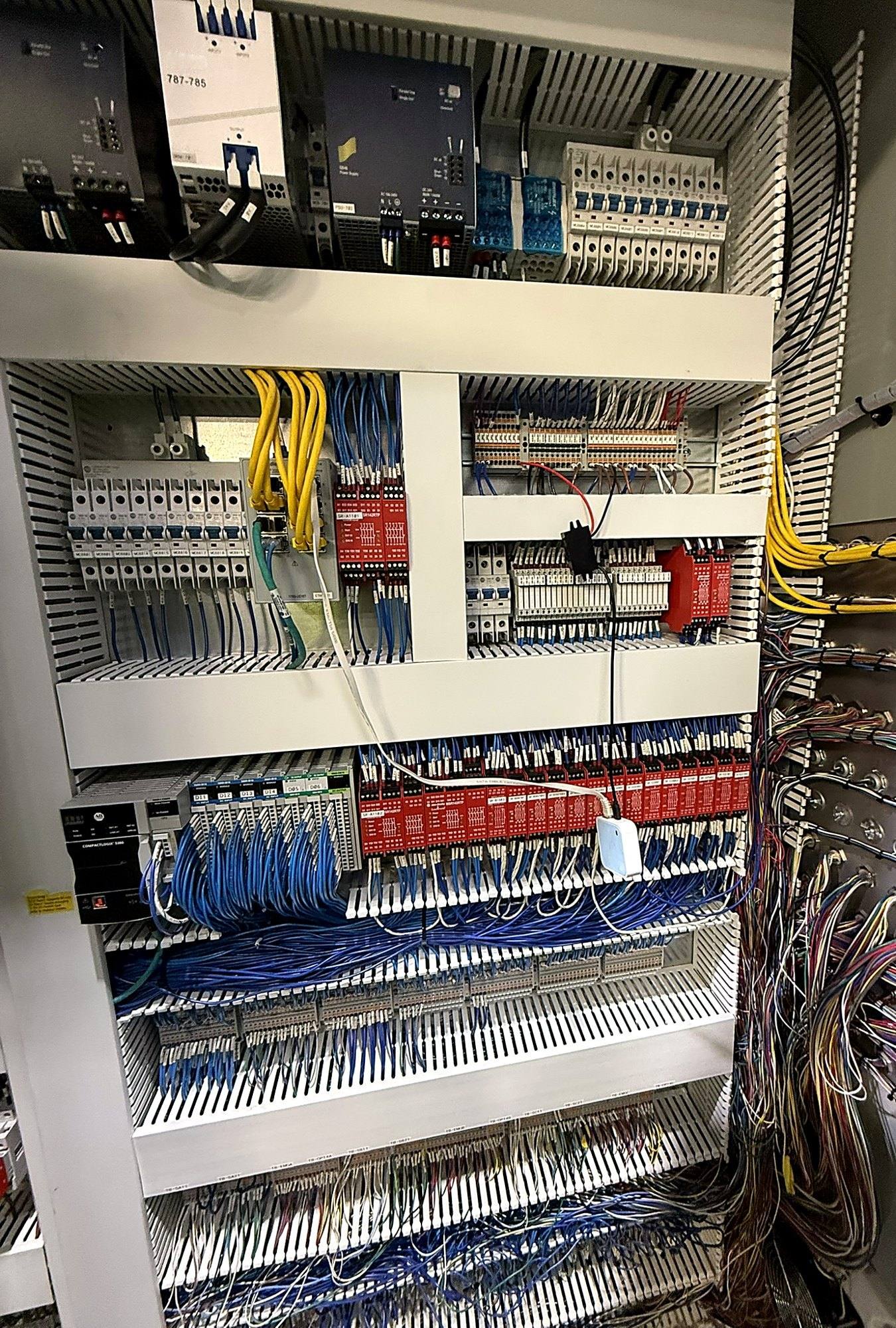
| Control panel | PLC, safety circuit, power supplies, terminals and the network to the robot controllers | Built, wired and tested in-house |
| Code | FANUC robot programs, Allen-Bradley or Siemens PLC logic, and the operator screens | Written in-house |
| Data and ERP link | Cycle and fault logging, counts and scrap posted to your ERP, iPhone alerts, when the job calls for them | Written in-house |
| Run-off | The finished cell running as one machine before it ships | Our shop |
| Install and commissioning | The cell set in place on your floor, connected and brought up, with tie-ins to your other machines as the quote spells them out | Our team, at your plant |
A few things usually stay on your side, and a good quote names them.
Usually on your side
- Sample parts for gripper development and the run-off, including the awkward ones
- Power and compressed air run to the spot
- A floor that can take the anchor bolts; slab thickness matters for the robot base
- Network access, if the cell reports to your systems
- A window when the line can be down for the install
Whoever you buy from, ask for a written list of what the quote leaves out. Our robot cell cost breakdown goes through every line and what moves its price.
Turnkey vs pre-engineered robot cells
The word gets used two ways. Some suppliers mean a pre-engineered cell: a standard base, guarding and controls package built to a catalog design, common in arc welding, with the robot and tooling fitted to it. Others mean a custom cell designed around one job and delivered running. Both arrive ready to run. They differ in where the design starts.
| Pre-engineered cell | Custom cell | |
|---|---|---|
| Starting point | A standard design | Your part, your rate and your floor space |
| Fits best when | The part and process match what the design was made for | The parts, the flow, the guarding or your controls standard don’t match a catalog design |
| Comparing quotes | Simpler, since the design is fixed | Needs a line-by-line scope from each supplier |
We build custom cells. If a standard cell already fits your part and your rate, it may be the simpler buy.
How we build each cell
The same five steps run on every cell, whether it is a palletizer at the end of a packaging line or two delta robots picking off one belt. The first four happen in our shop and the last on your floor. Robot cell design and build goes through each one in detail, including how the layout gets proven in SolidWorks.
-
Design
The full cell is modeled in SolidWorks before metal is cut, with reach, clearances, part flow, guarding and the operator's position settled in the model.
-
Fabricate
Frames, bases, guarding and grippers come off CalWest Manufacturing's laser, press brake, welding and 5-axis equipment. Laser-cut guarding gives the cell a clean, OEM-style finish.
-
Wire
The control panel is built, wired and tested in our shop, and run with the cell's own code before anything ships.
-
Code
Robot paths, vision picks and conveyor tracking, the PLC and safety logic, and the operator screens are written in-house, alongside the build.
-
Install
The finished cell is run off in our shop, then installed and commissioned on your floor.
Each cell below links to a longer page on that cell type, the project write-up, or both.
Palletizing and assembly cells
Robotic palletizing
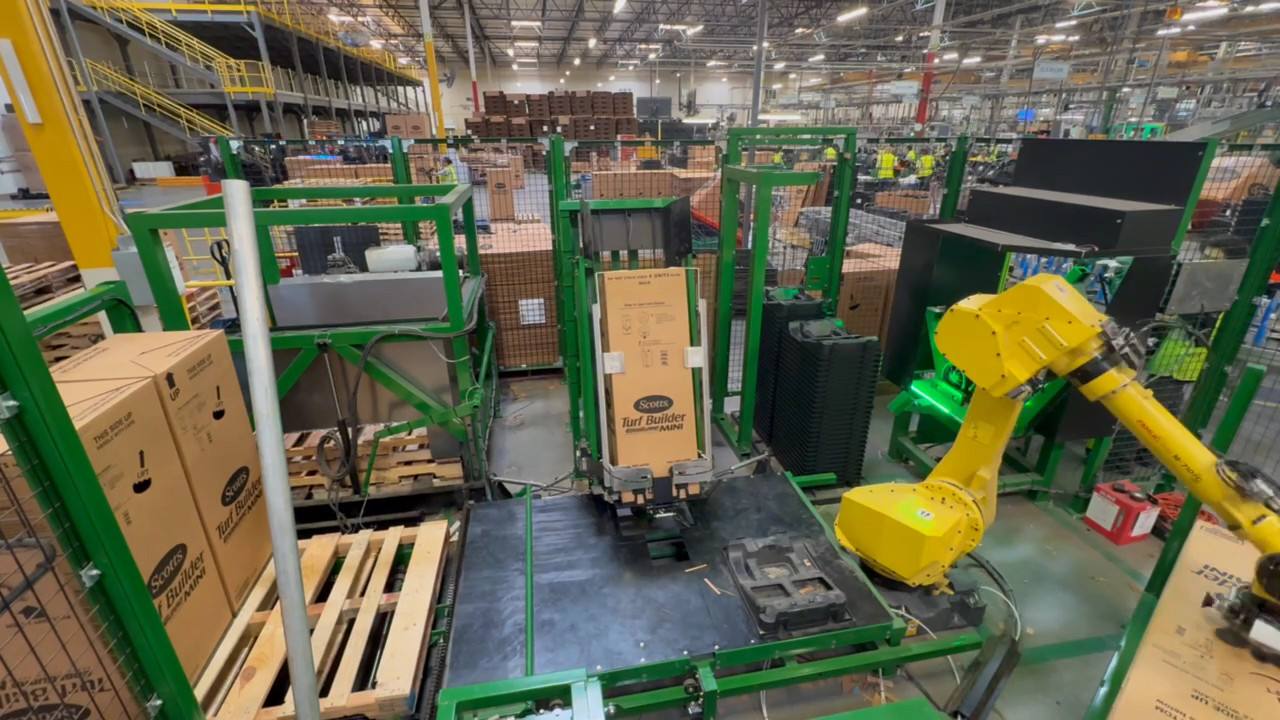
At the end of each packaging line, FANUC robots grip every case off the line, turn it and swing it onto the pallet, placing each one to the stack pattern layer by layer. We built these cells for a national lawn and garden brand and installed them on the live production floor of its Temecula, CA plant. Read more about robotic palletizing cells, or go straight to the Temecula palletizing job. Unloading inbound pallets onto a line is the same job in reverse, covered under robotic depalletizing, and loading product into cases ahead of the palletizer is covered under robotic case packing.
Robotic assembly
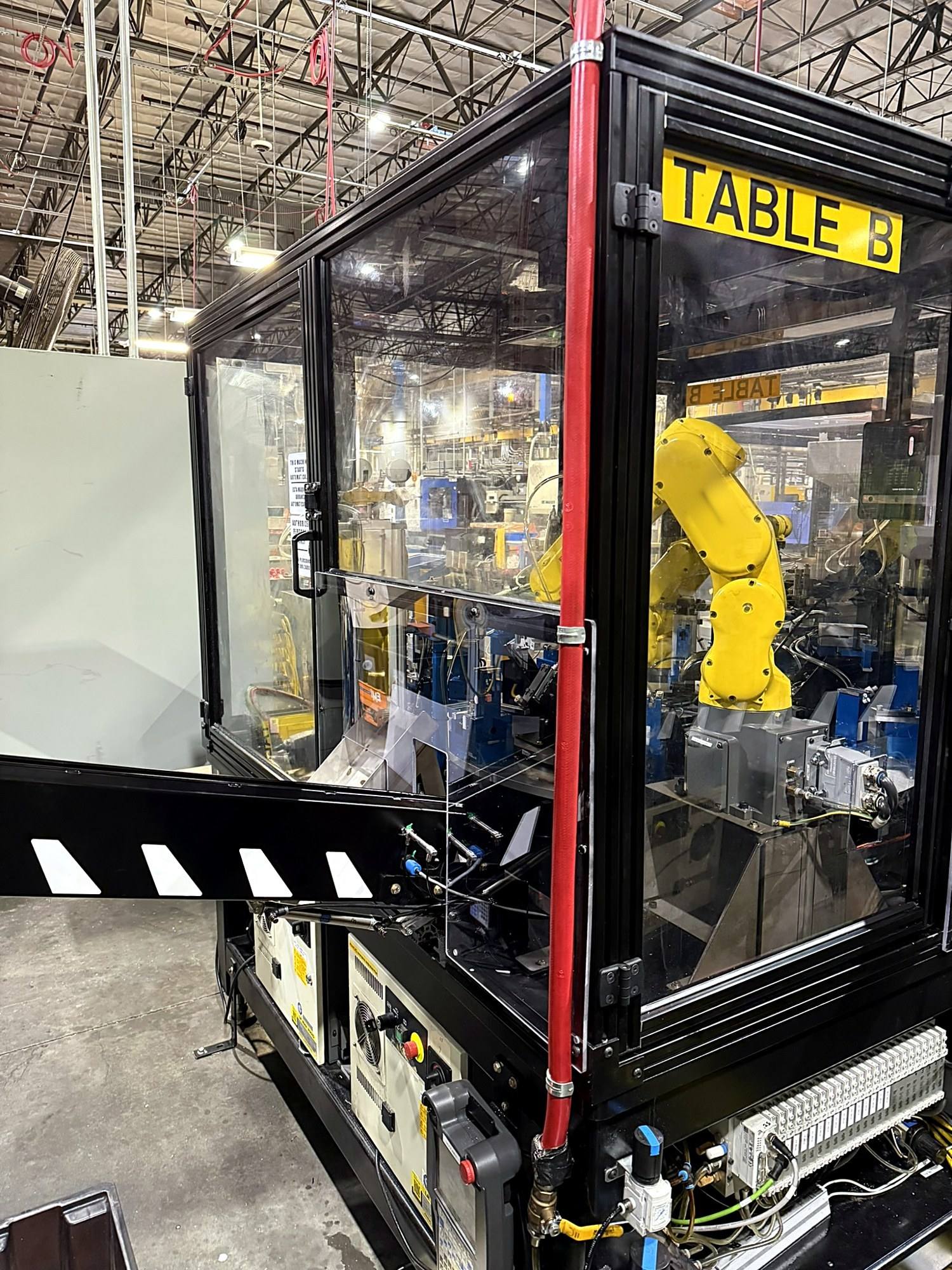
LR Mate robots assemble spray nozzles at three tables, with bowl feeders presenting parts nonstop. The fingers were machined in-house to fit the part, each table is interlocked and light-curtained, and the operator screen shows cycle time per table, color changeover and fault status. The robotic assembly page covers the cell type; the spray nozzle assembly project covers the job.
Picking and vision-guided cells
Delta robot pick and place
Two FANUC delta robots work one moving belt. iRVision finds each part, iRPickTool splits the picks between the two robots, and both controllers hold the full line map, so the robots share the load as they place parts into trays. See delta robot pick and place for how these cells are put together, and the delta tray loading line for the job itself. Tying a belt like that into the robot, the PLC and the safety circuit is covered under conveyor system integration.
Vision-guided robots
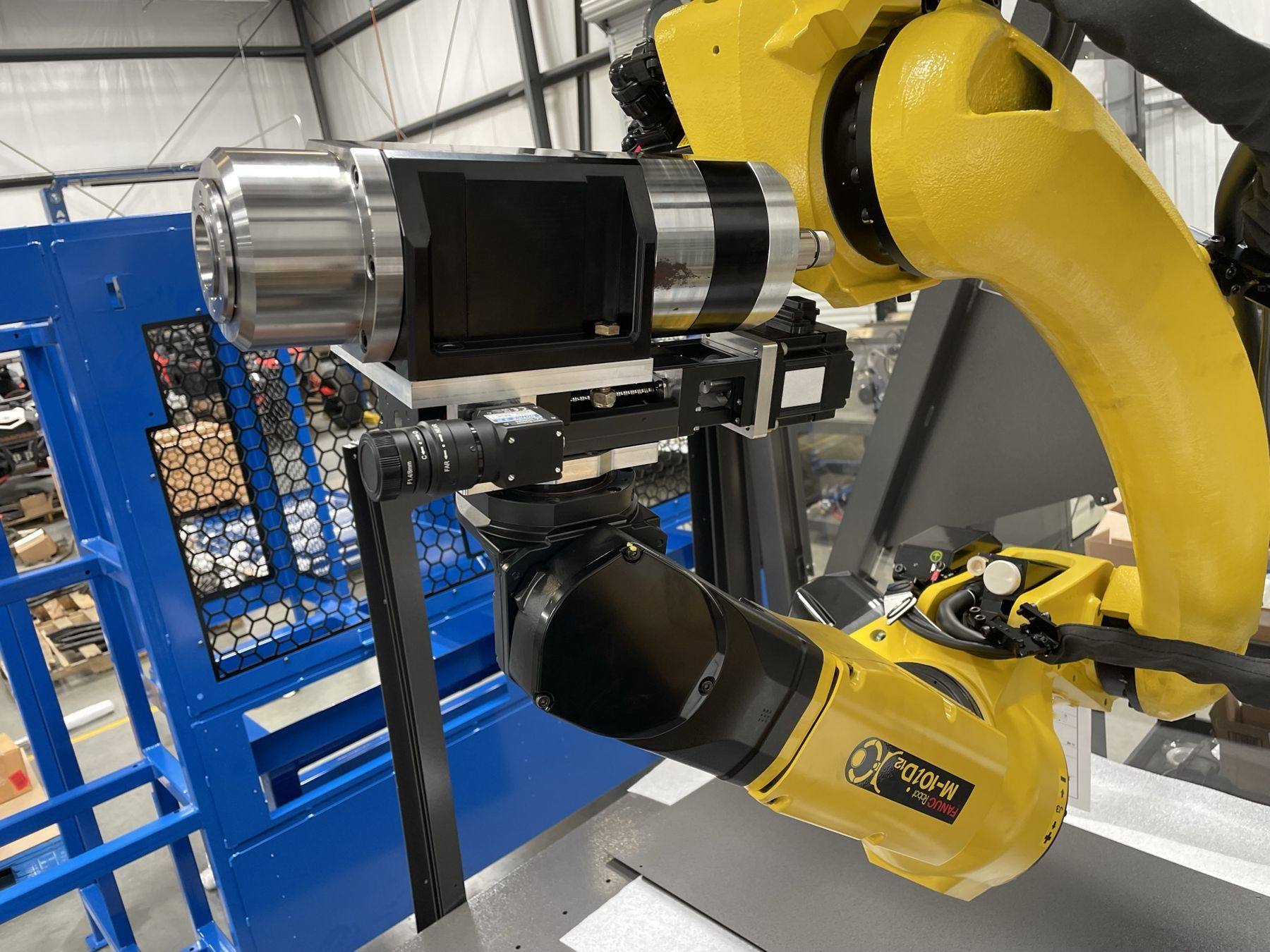
When a part never lands in quite the same spot, a camera tells the robot where it is. We mount cameras on the arm where the job calls for it (Fig. 3), set up iRVision on the robot controller, and tune the picks on our own floor before the cell ships. There is more on this under vision-guided robotics.
Machine tending and machining cells
Machine tending
In one tending cell, a robot moves parts from a Swiss lathe into a heater. After the heating cycle a second robot places them into a forge, and finished parts go out onto two trays. The cell was built to support lights-out running. The machine tending cells page walks through it, and forging robot cells covers the heater and forge side.
Robotic drilling and milling
In one robotic drilling and milling cell we built, a FANUC robot puts hundreds of precise holes into complex 3D parts. It carries a router head with tool changing and works over a custom fixture table that holds each part aligned to the CAD model. The cell includes a calibration step, and a vision system checks each drilled hole and logs the quality data.
Tooling and guarding from our own shop
End-of-arm tooling
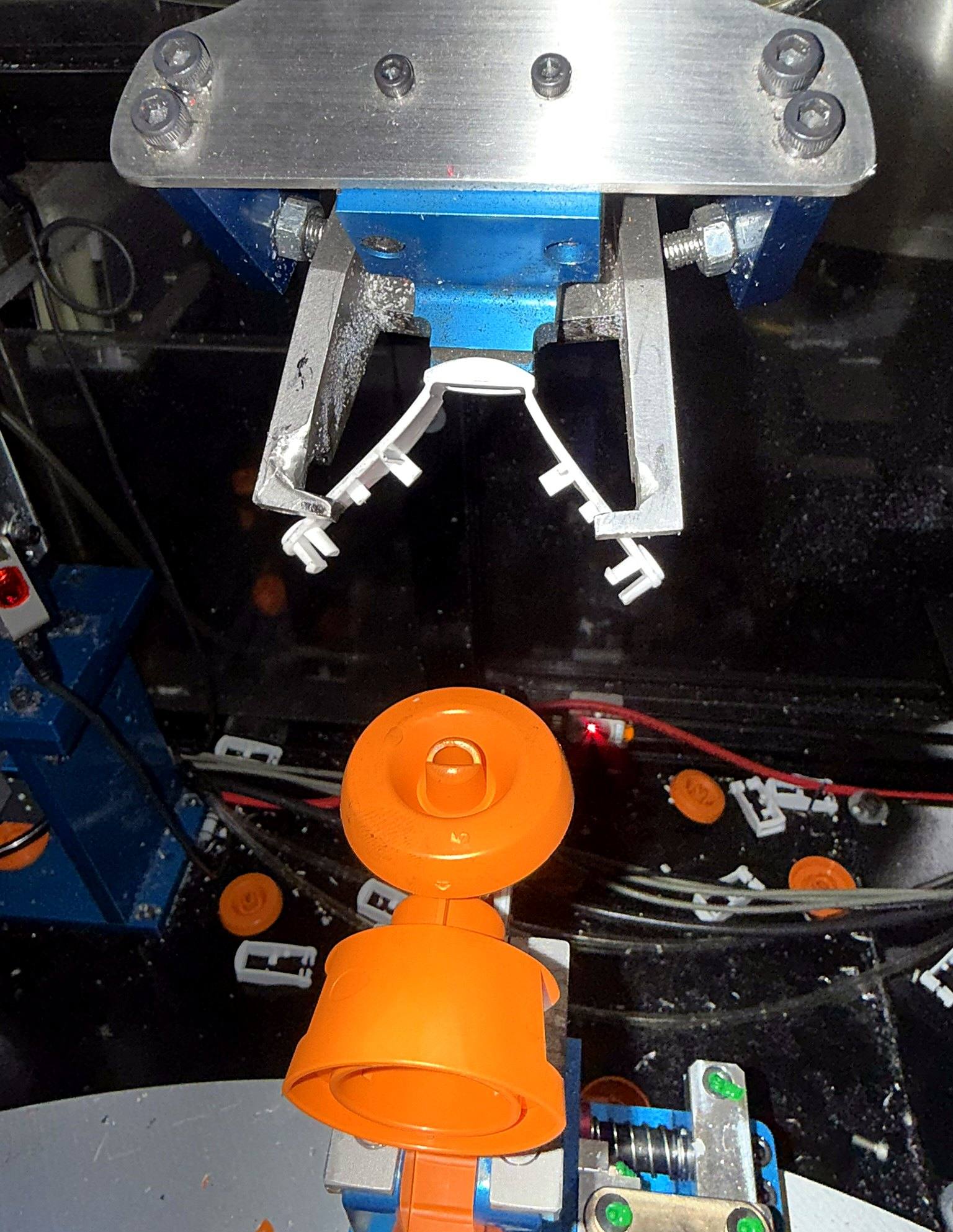
We design end-of-arm tooling here and machine the grippers in-house, in the same shop that cuts and welds the frames and guarding. The fingers in the nozzle assembly cells were machined here to fit the part (Fig. 5). Other jobs call for other tools: soft-touch fingers that move raw dough without marking it on the bakery deltas, and multi-cup vacuum grippers on the tray loading line.
Robot cell guarding
We laser-cut robot cell guarding panels in our own shop, which gives a cell a clean, OEM-style finish. Where interlocked doors and light curtains go comes out of the risk assessment; the three assembly tables, for example, are interlocked and light-curtained. Our robot safety standards guide explains what the standards ask for, and your own safety professional should review the assessment for your cell.
Bakery and food cells
In a commercial bakery, FANUC robots move dough between trays and racks on a live production floor. The same kind of transfer between conveyors, machines and racks in other plants is covered under robotic material handling. Delta robots with soft-touch grippers move raw dough without marking it. For washdown floors we build food-grade cells with washdown-rated FANUC robots in stainless guarding. The full write-up is on the bakery automation page, and the other plants we build for are listed by industry.
Weld cells
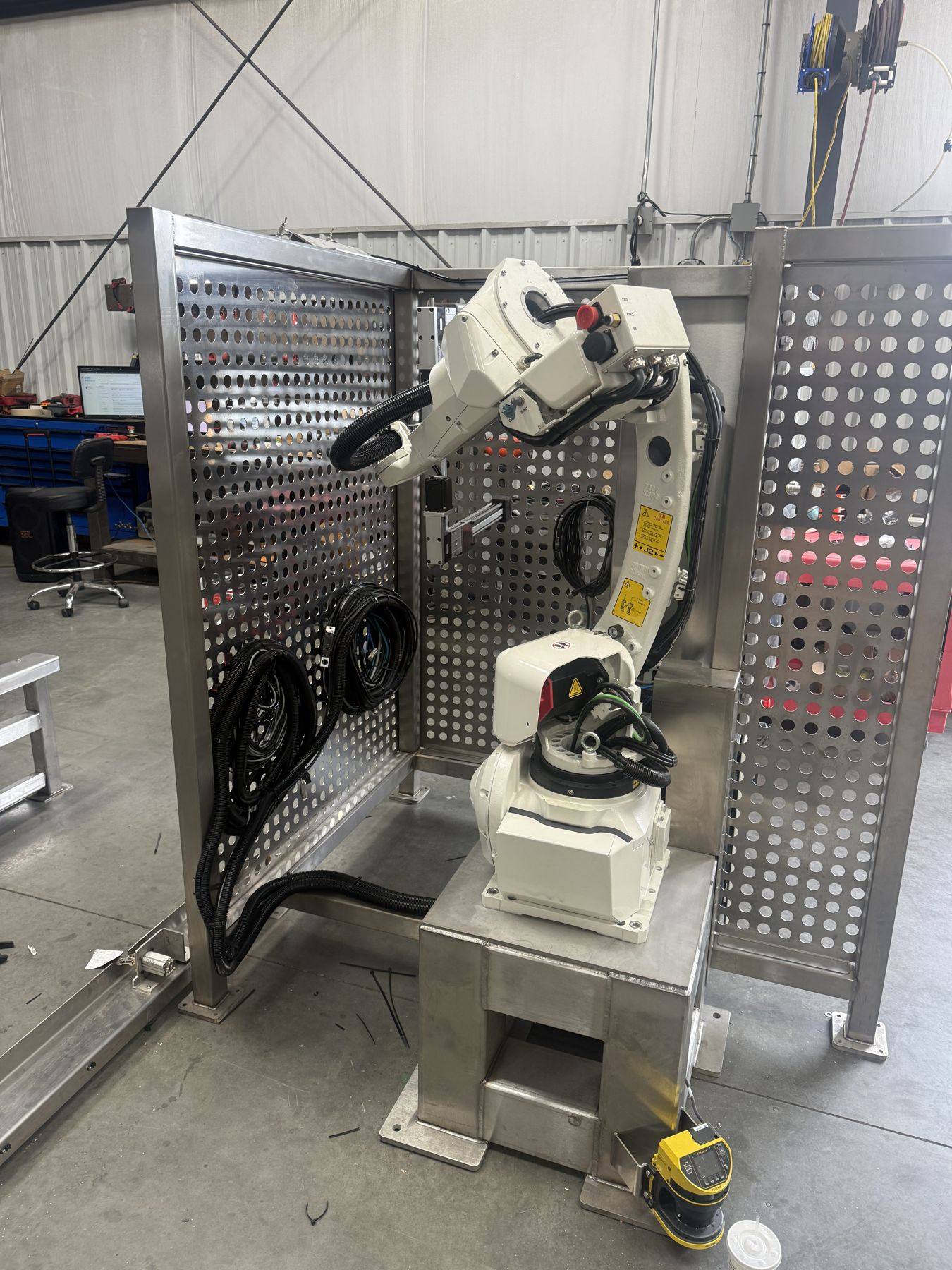
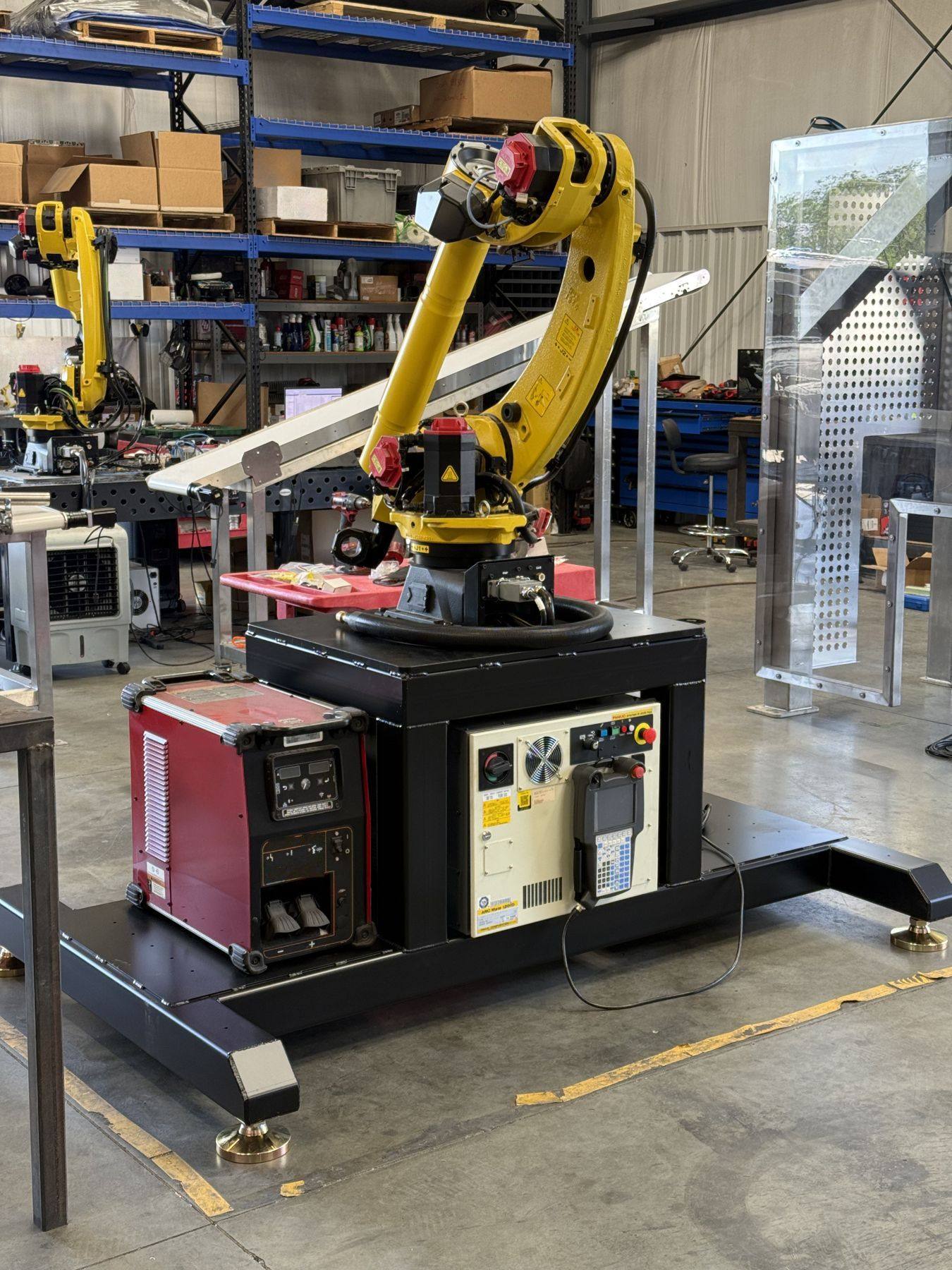
We build FANUC weld cells, designed in CAD and then built and taught in our shop. Welding is one of CalWest Manufacturing’s core trades, alongside laser cutting, bending and 5-axis machining. If that is close to what you need, call and we will walk you through what we have built.
A custom tapping machine, with no robot in it
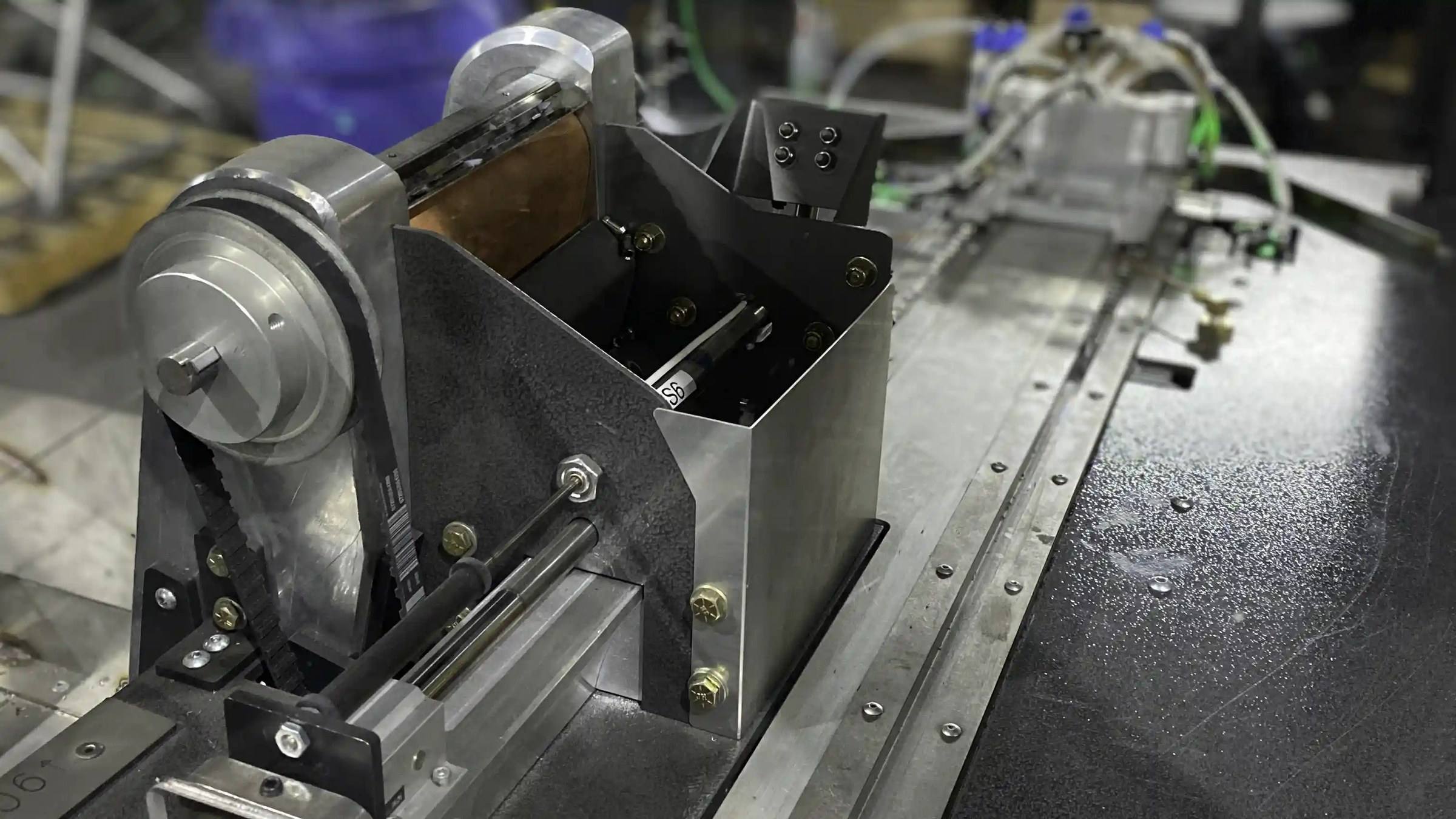
Some jobs don’t need a robot at all. For an aerospace supplier we built an automated tapping machine: a custom feeder and tapping mechanism for high-volume production of an aircraft part, with PLC control of every mechanical function and an HMI for real-time monitoring. That job is written up as the aerospace tapping machine. More project write-ups are on the projects page.
The software that comes with the cell
The operator screens on our cells are written for the crew who will run them rather than from a template. On the Temecula assembly cells, the screen shows cycle time per table, color changeover and fault status. More on custom HMI screens.
When the job calls for it, we also write the software that connects the cell to the rest of the business:
- Counts, jobs and scrap posted to your ERP automatically, so nobody re-keys them. See machine data and ERP integration.
- Every cycle and fault logged with a time stamp and searchable later.
- Status and push alerts on an iPhone, for the people who aren’t standing at the cell.
We run our own shop on software we wrote: department boards on the shop TVs, live job tracking, and an iPhone app with jobs, schedules, team chat and push alerts. The PLC logic, panels and screens have their own section under controls and software.
When the part changes, or the robot needs work
When a part changes after the cell is built, the change usually lands on the gripper. Ours are designed in this building and machined on our own 5-axis, so a gripper can be changed the same week, and the people who wrote the robot program make the matching touch-up here too.
We also service and reprogram FANUC robots that other companies installed, not only the cells we build. Call or text (818) 397-4809 with the robot model and what it needs to do.
From a phone video to a firm quote
Send us a phone video of the manual process or a part drawing. We come back with a cell concept and a plan: the FANUC robot we’d use, what the gripper does, where parts come in and leave, where the guarding goes and where the operator stands. Once the open questions are settled with your team, we quote the cell.
If your process isn’t one of the applications on this page, send it anyway. The list reflects jobs we have built, not a limit on what we will look at, and sometimes the answer is a custom machine rather than a robot.
How a project works with us lists what to send first and what we need from your side at each stage. If your drawings are export controlled, call before sending anything.
CalWest Robotics is a FANUC Authorized System Integrator at 13815 Arrow Rte, Fontana, CA 92335, and we install cells at plants anywhere in the US. Our parent company, CalWest Manufacturing, is AS9100D and ISO 9001 certified and ITAR registered. Call or text the robotics line at (818) 397-4809. Bring us the process. We’ll bring the cell.
Common questions
- Can a new robot cell work with the machines already on our line?
- Usually, yes. The signals between the cell and the machines on either side, such as part ready, cycle done and fault, are settled before the build and tested when the cell is commissioned on your floor. We write the PLC logic in Allen-Bradley or Siemens, so the cell can follow your plant's standard where you have one. Which side wires and programs the other machine's end of the handshake should be written into the quote.
- What does a robot cell quote usually leave out?
- Ask every integrator for the exclusions in writing, us included. Common ones are rigging, power and air drops, anchoring and floor work, network runs, the signals to your existing machines, and training for operators and maintenance staff. Our robot cell cost breakdown lists the lines a complete quote should cover, so two quotes can be compared item for item instead of by the total.
- Who writes the robot and PLC code?
- We do. The FANUC robot programs, including iRVision picks and iRPickTool conveyor tracking, the Allen-Bradley or Siemens PLC and safety logic, and the operator screens are all written in-house, under the same roof where the frame is welded and the panel is wired. When a signal between the robot and the PLC has to change, the people who wrote both sides are in the same building.
- Can you give us a price before you see the process?
- Not one worth planning around. The price depends on the robot, the gripper, the guarding, the controls, any vision, the programming and the install, and all of those change from one process to the next. We don't publish prices; we quote each cell once we understand the process. Our robot cell cost breakdown splits a cell price into its line items so you can see what drives it before you ask.
- Do you work on robot cells you didn't build?
- Yes, as long as the robot is a FANUC. Besides the cells we build, we service and reprogram FANUC robots other companies installed: teaching a new part, adding iRVision, moving a robot, or finding out why a cell has stopped. Call or text (818) 397-4809 with the robot model and what it needs to do.