
A robot integrator for plants across the United States
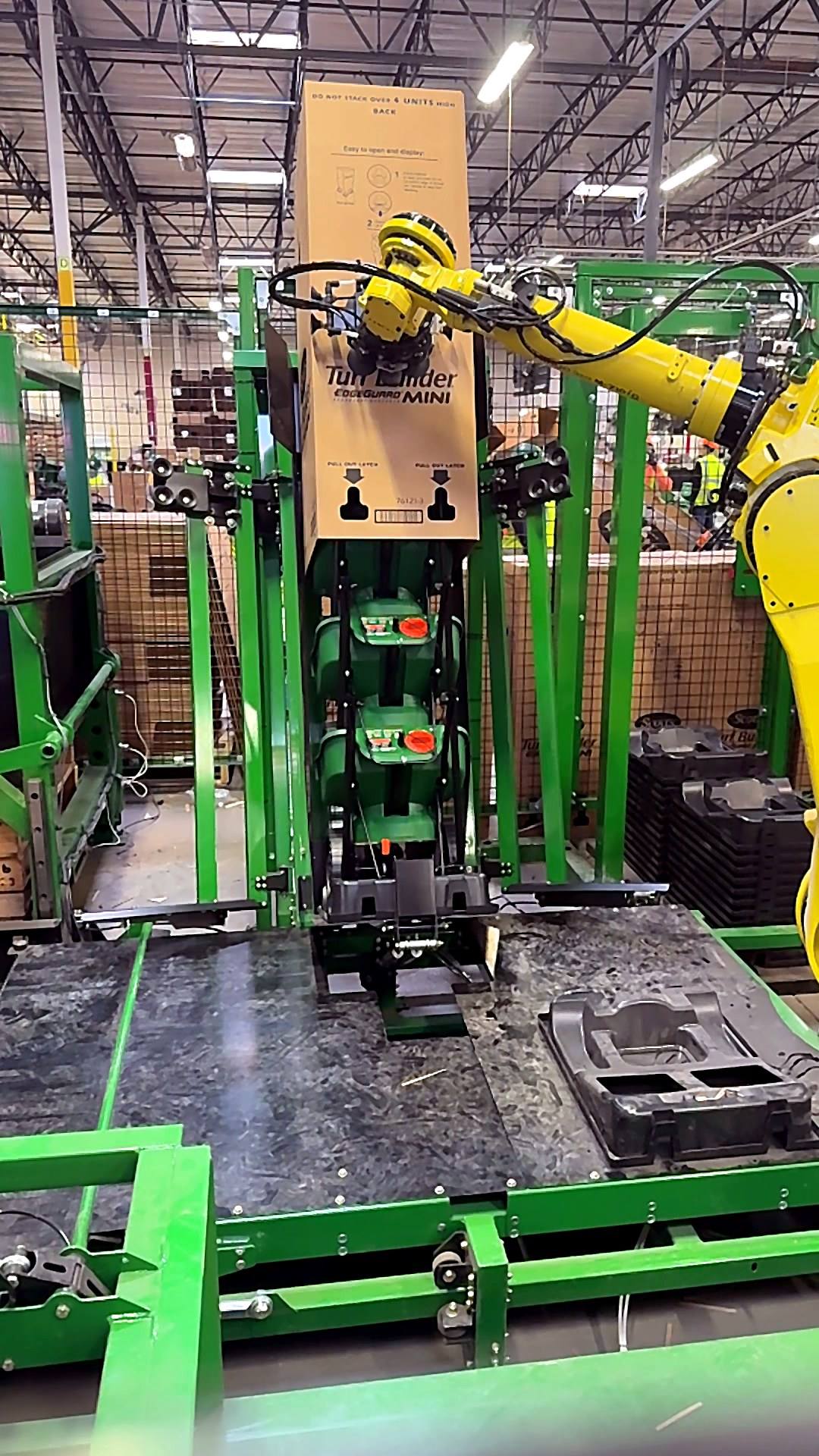
We build every cell in one shop in Fontana, California, run it there with your parts, then ship it and install it on your floor, wherever your plant is.
- Built in
- Fontana, CA
- Installed
- Anywhere in the US
- Robots
- FANUC
- Remote support
- Secure VPN, when you allow it
- Built in
- Fontana, CA
- Installed
- Anywhere in the US
- Robots
- FANUC
- Remote support
- Secure VPN, when you allow it
CalWest Robotics is a FANUC robot integrator in Fontana, California, and we take on projects for plants anywhere in the United States. Every cell is designed, fabricated, wired and programmed in our own shop at 13815 Arrow Rte. It runs there with your parts before it ships. Then our team installs and commissions it on your floor, whether that floor is 15 miles away in Riverside or 1,500 miles away in Houston.
In short
The Bureau of Labor Statistics counted about 12.6 million manufacturing jobs at roughly 400,000 private establishments across the country in 2025. Most of those plants are nowhere near Fontana. The rest of this page covers what distance changes in a robot project and what it doesn’t, and the regions we’ve written up so far.
How a robot cell gets from Fontana to your plant
-
Send us the process
A phone video of the job done by hand, a part drawing, or both. Call or text (818) 397-4809. This step works the same from any state.
-
Concept, review and quote
We come back with a cell concept and a plan. The design review can happen on a video call with the SolidWorks model on screen, and the quote covers the cell as reviewed.
-
Build in Fontana
Frame, guarding, panel, gripper and code are made in our shop. Robot paths are laid out and checked in FANUC ROBOGUIDE before they run on the real robot, and new motion is first stepped through slowly in T1.
-
Run-off (FAT)
The finished cell runs your parts in our shop against the agreed test sheet. Ontario International Airport is about 10 miles from the shop by road.
-
Ship
The cell is split into sections that travel by truck. Where it comes apart, and how the wiring reconnects at each break, is worth settling during the design.
-
Install and SAT
Our team installs and commissions the cell on your floor, then runs the site acceptance test with your crew and the machines on either side.
-
Support
Program changes and troubleshooting over a secure VPN when your plant allows it, and a trip when the work needs hands at the cell.
The full sequence, with what we need from your side at each stage, is on how a project works with us. The cell itself is the same whatever the destination: see what a turnkey robot cell includes.
What changes when your plant is far from Fontana
The run-off matters more. On our floor, a gripper finger that marks the part can be remachined on our own 5-axis and fitted the same week, and the people who wrote the robot and PLC programs are in the building. On your floor, every change waits for a trip or a shipment. So the FAT should run your real parts, including the ugly ones, through every changeover and every fault you can think of. Our FAT and SAT checklists list what belongs on each test sheet.
Site readiness matters more too. Power and air run to the spot, a slab that can take the anchor bolts, and a network drop if the cell reports to your systems: if any of them isn’t ready when the install crew arrives, the crew waits. It pays to walk that list with your maintenance lead a week ahead.
Remote access is a question for your IT department, and it is better asked during the design review than after the cell is running. Some plants allow a VPN connection to the robot and PLC, some allow it only while someone on site is watching, and some don’t allow it at all. Any of those can work, as long as everyone knows which one applies before the cell ships.
What stays the same
One team designs, builds, wires and programs the cell, and the same team installs it. The drawings, the panel and the code that ran at the FAT are the ones that arrive at your plant. The robots are FANUC, so if your plant already runs FANUC, your maintenance team will know the teach pendant. The PLC logic is written in Allen-Bradley or Siemens to match your plant’s standard where you have one.
Regions we’ve written up
Each page below covers what plants in that region make, which of our cells fit them, and how far the shop is by road. The industry notes come from 2025 BLS county and state employment counts, cited on each page.
| Region | From our Fontana shop by road | What stands out in 2025 BLS counts | Read more |
|---|---|---|---|
| Inland Empire | About 11 miles to Ontario, 15 to Riverside | Fabricated metal, food, plastics; very large warehouse employment | Inland Empire |
| Los Angeles County | About 47 miles to downtown LA | Aerospace, food, fabricated metal, apparel | Los Angeles |
| Orange County | About 45 miles to Santa Ana | Electronics, medical devices, fabricated metal | Orange County |
| San Diego County | About 115 miles | Electronics, aerospace, chemicals | San Diego |
| Southern California, all of it | Our home region | Overview of the five counties and our Temecula install | Southern California |
| Northern California | About 260 miles to Fresno, 380 to San Jose | Semiconductors and electronics; food and beverage processing | Northern California |
| Arizona | About 330 miles to Phoenix | Semiconductors, aerospace, fabricated metal | Arizona |
| Nevada | About 225 miles to Las Vegas, 450 to Reno | Electrical equipment, warehousing and distribution | Nevada |
| Texas | About 1,400 miles to Dallas, 1,500 to Houston | Fabricated metal, machinery, chemicals, aerospace | Texas |
If your state isn’t in the table, the project runs the same way as one in Texas: the cell is built and proven in Fontana, shipped, and installed by the team that built it. The list reflects where we have written pages so far, not a limit on where we’ll go.
Robots already on your floor
Not every job is a new cell. We also service and reprogram FANUC robots that other companies installed: teaching a new part, adding iRVision, moving a robot, or finding out why a cell has stopped. Whether a job needs a trip depends on the work. We don’t promise response times or a fixed service radius, so tell us the robot model, the controller and what it needs, and we’ll give you a straight answer on how we’d handle it.
Start with a video or a drawing
Wherever your plant is, the first step is the same. Send a phone video of the manual process or a part drawing to sales@calwestmfg.com, or call or text (818) 397-4809. The contact page can start the email for you. We come back with a cell concept and a plan, including what the distance means for your schedule.
Common questions
- Do you install robot cells outside California?
- Yes. Every cell is built and run off in our Fontana shop, then shipped and installed at the customer's plant, and that plant can be anywhere in the United States. Distance changes the logistics of a project, such as the trip to the run-off, freight and the install crew's travel, but not who builds the cell or how it is built.
- Do you have offices or technicians in other states?
- No. We have one shop, at 13815 Arrow Rte in Fontana, CA. The people who design, build and program your cell work there, and the same team travels to your plant to install and commission it. Cells we install can also be reached over a secure VPN connection for program changes and troubleshooting, when your plant allows it.
- Do we have to travel to Fontana for the factory acceptance test?
- We recommend it. The run-off is where a change costs the least, and your operator lead and maintenance tech learn more from watching the cell fault and recover than from any manual. If nobody can make the trip, talk to us about following the test on video. Either way, agree on the pass criteria before the build starts.
- How does remote support work on a cell installed far away?
- Your IT team decides whether outside access is allowed and how. When it is, we connect over a secure VPN to the robot and PLC for program changes and troubleshooting. A crash, a worn part or a wiring fault still needs hands at the cell. We don't publish response times, so settle support terms before the PO, especially if your plant runs nights or weekends.
- Can you work on FANUC robots we already have in another state?
- Often, yes. We service and reprogram FANUC robots other companies installed, not only our own cells: teaching a new part, adding iRVision, moving a robot or finding out why a cell has stopped. Call or text (818) 397-4809 with the robot model, the controller and what it needs to do, and we'll tell you whether the job needs a trip.