
Robot integration timeline: the phases and what stretches them
We don't publish durations, because most of them hang on parts and decisions outside any one company's control. Here is the order of the phases, what each one waits on, and what you can do to keep it short.
A robot integration timeline is a chain of phases, and several of them run side by side. How long the chain takes depends on a few links: bought parts with long lead times, decisions that close late, production parts that arrive late, and the date your line can stop. CalWest Robotics designs, builds, wires and programs FANUC cells in Fontana, CA and installs them at plants across the US. This guide lays out the phases in order and what stretches each one.
In short
Robot integration phases, in order
| Phase | What happens | Waits on | What stretches it |
|---|---|---|---|
| Concept | A cell concept and plan from your video, drawings or description | Your process information | A missing rate, variant list or sample parts |
| Quote and order | A firm quote on the reviewed concept, then the purchase order | Your approvals | Capital approval cycles, vendor setup paperwork, open spec questions |
| Design and design review | The full cell modeled, reach and clearances checked, the layout reviewed with your team | Your reviewers’ time | Rounds of layout changes, a late change to rate or parts |
| Long-lead parts | Robot and controller, safety devices, vision, drives, conveyors ordered | Supplier lead times | Special options, ordering only after every detail is final |
| Fabrication | Frame, base, guarding, fixtures and grippers made | Released drawings | Changes after steel is cut |
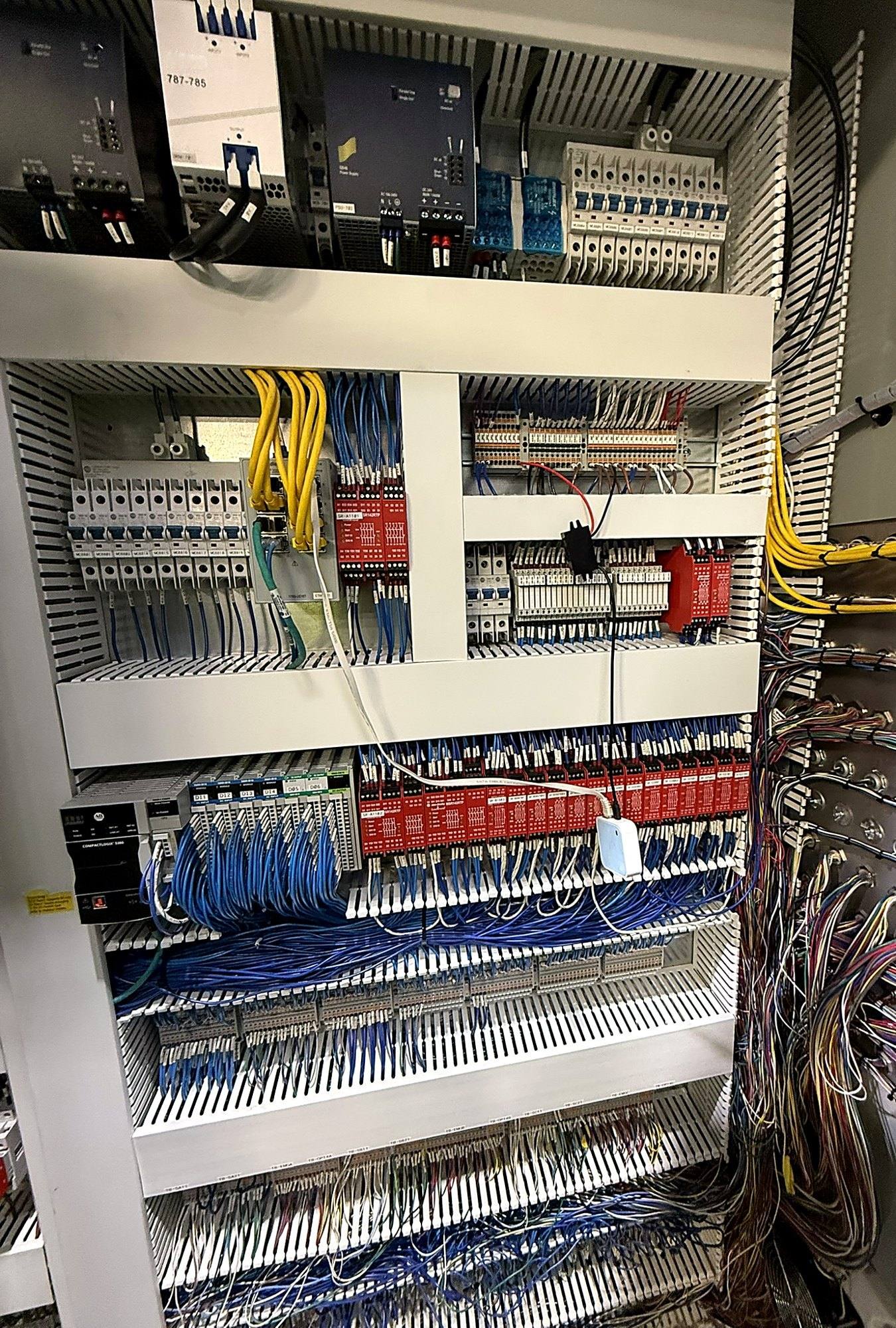
| Panel build | Control panel built, wired and tested | Components, schematics | Late I/O changes |
| Programming | Robot paths, PLC and safety logic, HMI screens | The design, the I/O list, the other machines’ signal lists | Part variants, recipes, handshakes, fault recovery |
| Factory acceptance test | The run-off with your parts in the builder’s shop | Production parts, your attendance | Parts arriving late, punch-list rework |
| Ship and install | Crating, freight, rigging, anchoring, hookups | Site readiness, your install window | No power or air at the spot, a short shutdown |
| Site acceptance test | Safety re-verified, live production on your floor | The machines on either side, product to run | Neighboring equipment not ready, no product scheduled |
| Training and handover | Operators and maintenance trained, documents and backups handed over | Your people’s availability | Several shifts to train, staff changes |
Our how we work page describes the same stages from the customer’s side, including what we ask you for at each one.
What runs in parallel, and what sets the critical path
The phases aren’t strictly one after another. Once the design is released, the robot is on order, the frame is being cut and welded, the panel is being built and the programs are being written, all at once. Robot paths can be laid out and checked in FANUC ROBOGUIDE, FANUC’s offline simulation software, before the robot arrives. Our page on offline robot programming covers what that gets done early.
The critical path is the longest chain of steps that each wait on the one before. Shortening anything off that chain doesn’t move the finish date. On a cell project it is usually one of four things: the lead time on the robot or another bought part, a design review that won’t close, production parts that aren’t ready, or an install window that only opens at a planned shutdown. Ask your integrator which one controls your job, and to tell you when it changes.
What stretches each phase
Before the order
Most delay before the order is missing information or internal approval. A concept needs the rate at your best hour, every part variant, sample parts and a view of the station. If your purchasing team needs vendor paperwork, insurance certificates or a supplier setup before a PO, start it alongside the quote instead of after it. The automation RFQ builder collects the spec in one brief, which cuts the back-and-forth.
Design review
Every round of layout changes pushes back the start of fabrication. Bring operators, maintenance and your safety lead to the first review, not the second. Settle the rate, the variants, your PLC standard and your safety requirements before the review closes. Changes are cheapest here, and the robot cell design page shows what the model has to prove before steel is cut.
Long-lead parts
The robot, its controller and its software options are usually the first things ordered, along with safety devices, cameras, servo drives and conveyors. Their lead times depend on the model, the options and the market at the time, so get them confirmed when the order is placed rather than assumed from the last job. Once the robot model is certain, it can often be ordered before smaller details of the layout are settled.
Fabrication and panel build
When the frame, panel and gripper come from different subcontractors, each change waits in someone else’s queue. In our case the frame, guarding, fixtures and grippers are cut, formed, welded and machined in the same building, and panels are built, wired and tested here, so a change goes back to the people who made the part. A gripper finger can be remachined and changed the same week. If your plant or inspector requires a listed control panel, say so in the RFQ, because it affects who can build it.
Programming
Programming time grows with part variants, recipes, changeovers, handshakes with the machines upstream and downstream, and fault recovery. The handshakes are the part most often held up by someone else: send the signal list and timing for each neighboring machine early, and name a contact at its vendor if there is one. On the floor, new motion is first stepped through slowly in T1 before the cell runs at speed.
Factory acceptance test
The run-off can only start when production parts arrive, so send them early, enough for a real run, and include the bad ones. Agree what counts as a pass before the build starts. IEC 62381, written for process-industry automation, defines factory and site acceptance tests, and the same idea applies to a robot cell: settle in advance what gets tested where. Our FAT and SAT guide has checklists for both.
Ship, install and site acceptance test
We build in Fontana and ship anywhere in the US, so freight and crew travel are part of the plan for most plants. Install goes fastest when the site is ready before the truck arrives: power and air at the spot, a floor ready for anchors, network access, forklift or rigging access, and a clear install window. The site acceptance test also needs the machines on either side running and product to run through the cell.
Safety work doesn’t end at install. ANSI/A3 R15.06-2025, the US robot safety standard, added a part for the companies that use robot cells. Leave time in the plan for your safety professional to review the cell before production starts.
Training and handover
Train the operators on every shift that will run the cell, and the maintenance tech who will own it. Collect the program backups, schematics and spare-parts list before the project closes. On cells we install, we can connect over a secure VPN afterwards for program changes and troubleshooting, when the customer allows it.
What the buyer controls
Your side of the schedule
- One person who can make decisions, available for questions during the build
- The rate, part variants and changeovers settled before the design review closes
- Operators, maintenance and your safety lead at the design review
- Purchasing paperwork started alongside the quote
- Production parts, including the bad ones, shipped early for gripper trials and the run-off
- Signal lists for the machines on either side of the cell
- Power, air, network and anchoring ready before the cell arrives
- An install window agreed early, and product scheduled for the site test
- Operators and maintenance staff available for training
Planning backward from a fixed date
If the cell has to be running by a certain date, such as a planned shutdown, a product launch or the end of your tax year, say so at the first conversation and plan backward from it. For tax purposes, IRS Publication 946 says property is placed in service when it is ready and available for a specific use, so a cell that runs off in December and is commissioned in January can land in the later tax year. Our Section 179 guide covers that in detail; your CPA makes the call.
Working backward shows what has to be decided by when. Sometimes the answer is ordering the robot early, preparing the site before the cell ships, or installing in stages around the shutdown.
How we keep a schedule moving
Every cell is modeled in SolidWorks, paths are checked in ROBOGUIDE, and the frame, panel, gripper and code are made by one team in one Fontana building. The cell is run off in our shop with your parts, then installed and commissioned on your floor. The plan we send with a concept is where your schedule starts, and the dates firm up once the design review closes and the long-lead parts are ordered.
To get a concept and a plan for your process, send a video of the manual process or a part drawing through our contact page, or read how we build turnkey robot cells for plants across the US.
Common questions
- What usually takes the longest in a robot integration project?
- Usually the waiting, not the work. Lead times on the robot and other bought parts, design decisions that stay open, production parts that arrive late for testing, and an install window that only opens at a planned shutdown set most schedules. Which one controls yours depends on the job, so ask your integrator which item is on the critical path and to tell you when it moves.
- Can programming start before the robot arrives?
- Yes. Robot paths can be laid out and checked in FANUC ROBOGUIDE, FANUC's offline simulation software, while the robot is still on order, and the PLC and HMI programs can be written and tested against the I/O list. Taught points are touched up on the real robot once it is mounted, and new motion is first stepped through slowly in T1 before the cell runs at speed.
- How can we reduce line downtime during install?
- Have the cell run off with your parts before it ships, so install is setting it in place and connecting it rather than debugging it. Get power, air, network and anchoring ready before the cell arrives, send the signal lists for the machines on either side early, and schedule operator training into the install window instead of after it.
- What happens if we change the design after it is released?
- It depends on what has already been built or ordered. A change on paper is an edit. A change after steel is cut, the panel is wired or the robot is ordered costs rework and time. Log every change in writing with its cost and schedule effect, so both sides agree what moved and why. The design review is the place to make changes.
- Does an out-of-state integrator take longer?
- Distance mostly adds freight and travel, not build time. The cell is designed, built and run off in the integrator's shop either way. Attending the run-off means a trip to that shop, and install days include travel for the crew. On cells we install, we can connect over a secure VPN for program changes and troubleshooting afterwards, when the customer allows it.
Sources
- FANUC America: ROBOGUIDE robot simulation software
- IEC 62381:2024, Automation systems in the process industry: factory acceptance test (FAT), site acceptance test (SAT) and site integration test (SIT)
- The Robot Report: A3 releases full three-part national safety standard for industrial robots (ANSI/A3 R15.06-2025)
- IRS Publication 946 (2025), How to Depreciate Property (placed in service)