
How Section 179 applies to automation equipment like a robot cell
A robot cell is machinery, so the federal first-year write-offs usually apply to it. The catches are timing, since the deduction follows the date the cell is ready to run on your floor, and California, which follows different rules.
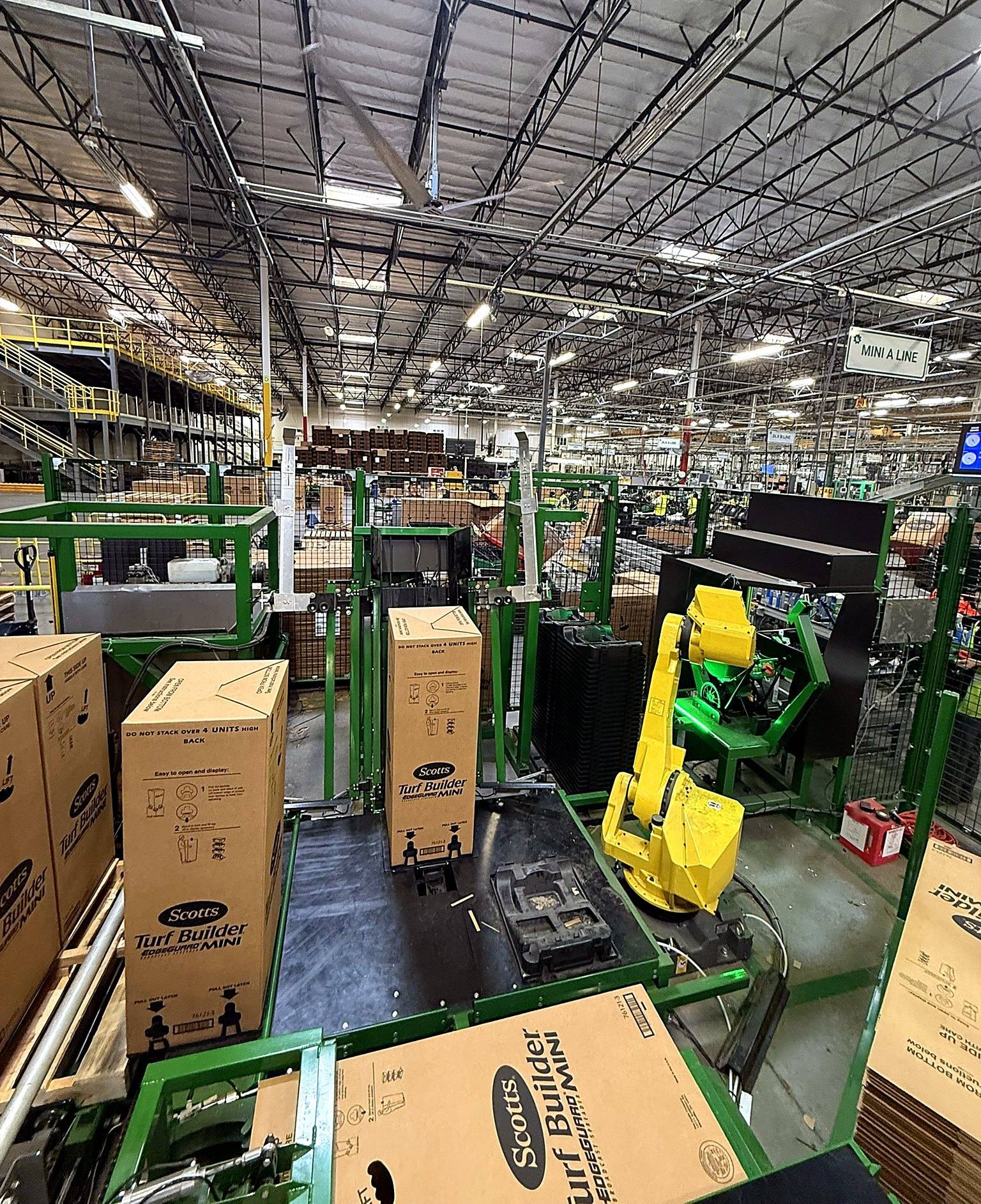
A robot cell is machinery bought for use in a business, which is the kind of property the federal first-year write-offs were written for. The Section 179 questions come down to two things: how much of the cell can come off this year’s taxes, and which tax year the cell lands in. This guide covers both for 2026, then the California return, which does not follow the federal rules.
In short
How Section 179 and bonus depreciation work
Without either rule, the cost of a cell is depreciated over several years on the normal federal schedule (MACRS). Section 179 and bonus depreciation both pull that deduction forward into the first year.
- Section 179 is an election. You choose which assets to expense and how much of each, up to an annual dollar limit, and the deduction can’t be more than your business income for the year.
- Bonus depreciation, which the IRS calls the special depreciation allowance, applies to qualifying property unless you elect out. The election out covers a whole class of property for the year, not a single machine.
Whatever isn’t deducted up front is depreciated over the regular schedule. Both rules change when you take the deduction. Over the life of the cell, the total deducted is still its cost.
Do robots qualify for Section 179?
IRS Publication 946 lists machinery and equipment as tangible personal property eligible for Section 179. It also covers other tangible property used as an integral part of manufacturing, except buildings and their structural components. The robot, its grippers, the guarding, the conveyors and the control panel are equipment. Work on the building itself, such as a new slab or a bigger electrical service to feed the cell, may be treated as part of the building. Ask your CPA to sort those lines before year end.
The property has to be bought, and used more than 50% for business in the year it goes into service. A production cell on your floor usually clears both easily.
Section 179 limits for 2026, federal and California
| Federal, tax years beginning in 2026 | California | |
|---|---|---|
| Section 179 maximum | $2,560,000 | $25,000 |
| Limit shrinks once the cost of qualifying property placed in service in the year exceeds | $4,090,000 | $200,000 |
| Section 179 fully phased out at | $6,650,000 | $225,000 |
| Capped at business income | Yes, the excess carries forward | Yes, the excess carries forward |
| Bonus depreciation | 100% for property acquired after Jan. 19, 2025 | Not allowed |
The federal figures come from IRS Rev. Proc. 2025-32. The California figures come from the FTB’s 2025 instructions for forms 3885A and 3885; check the 2026 instructions when they come out. Both limits apply to all the qualifying property you place in service in the year, taken together. A robot cell placed in service the same year as a new press brake shares one limit with it.
Bonus depreciation on a robot cell in 2026
The 2025 federal tax law, Public Law 119-21, made 100% bonus depreciation permanent for qualified property acquired after January 19, 2025. The IRS published interim guidance on it in Notice 2026-11 on January 14, 2026.
“Acquired” has a specific meaning. Property bought under a written binding contract is generally acquired on the date the contract is signed, or later if the contract has cancellation periods or contingencies. A custom cell adds a wrinkle. The notice keeps the existing rule that equipment built for you under a written binding contract signed before the build starts is treated as self-constructed property. Its acquisition date is when physical work of a significant nature begins, and a safe harbor sets that at the point where more than 10% of the total cost has been paid or incurred, not counting design and planning.
For a cell ordered in 2026, all of those dates fall well after January 19, 2025. The question only comes up when a contract was signed before that date, and even then it depends on the details. Under the self-constructed rule, a cell built to order is judged by when the build started, not when the contract was signed. Notice 2026-11 also allows an election that can give 100% to components acquired or started after January 19, 2025, even when the larger build began earlier. If yours is one of them, give your CPA the signed contract and the payment history.
Section 179 vs bonus depreciation: the business income limit
Publication 946 caps the Section 179 deduction at your taxable income from the active conduct of a trade or business. Anything over the cap carries forward to the next year. Bonus depreciation has no such cap. An article in the AICPA’s Tax Adviser notes that bonus depreciation can create a loss, while Section 179 cannot, and that Section 179’s asset-by-asset election gives more control over how much you deduct.
That is why CPAs weigh the two against the rest of your year. A year with thin profits can call for a different mix than a year with several large purchases.
When is a robot cell placed in service?
Both deductions are claimed in the year the cell is placed in service, not the year you sign the order or pay the deposit. Publication 946 says property is placed in service when it is ready and available for a specific use, even if you aren’t using it yet. Its first example is a machine delivered one year but not installed and operational until the next. That machine is placed in service in the second year.
A cell passes through several dates on its way to production:
-
Order
Contract or purchase order signed and deposit paid. For bonus depreciation this helps set the acquisition date. It does not set the tax year.
-
Run-off (FAT)
The finished cell runs your parts in the builder's shop. It works, but it isn't in your plant.
-
Ship and install
The cell is crated, delivered, set in place, anchored and connected to your power, air and line.
-
Commissioning and site test (SAT)
The cell runs production on your floor. This is the stage the IRS machine example points to. Your CPA makes the call on your cell.
We run off every cell in our Fontana shop before we commission it on yours, so the run-off and the commissioning are two separate dates. A cell that passes its run-off in December and is commissioned in January looks a lot like the machine in the IRS example. If the deduction matters this year, plan around the commissioning date, not the run-off. The FAT and SAT guide covers what each test checks. Keep a signed record of the site acceptance test, since it dates when the cell was installed and running.
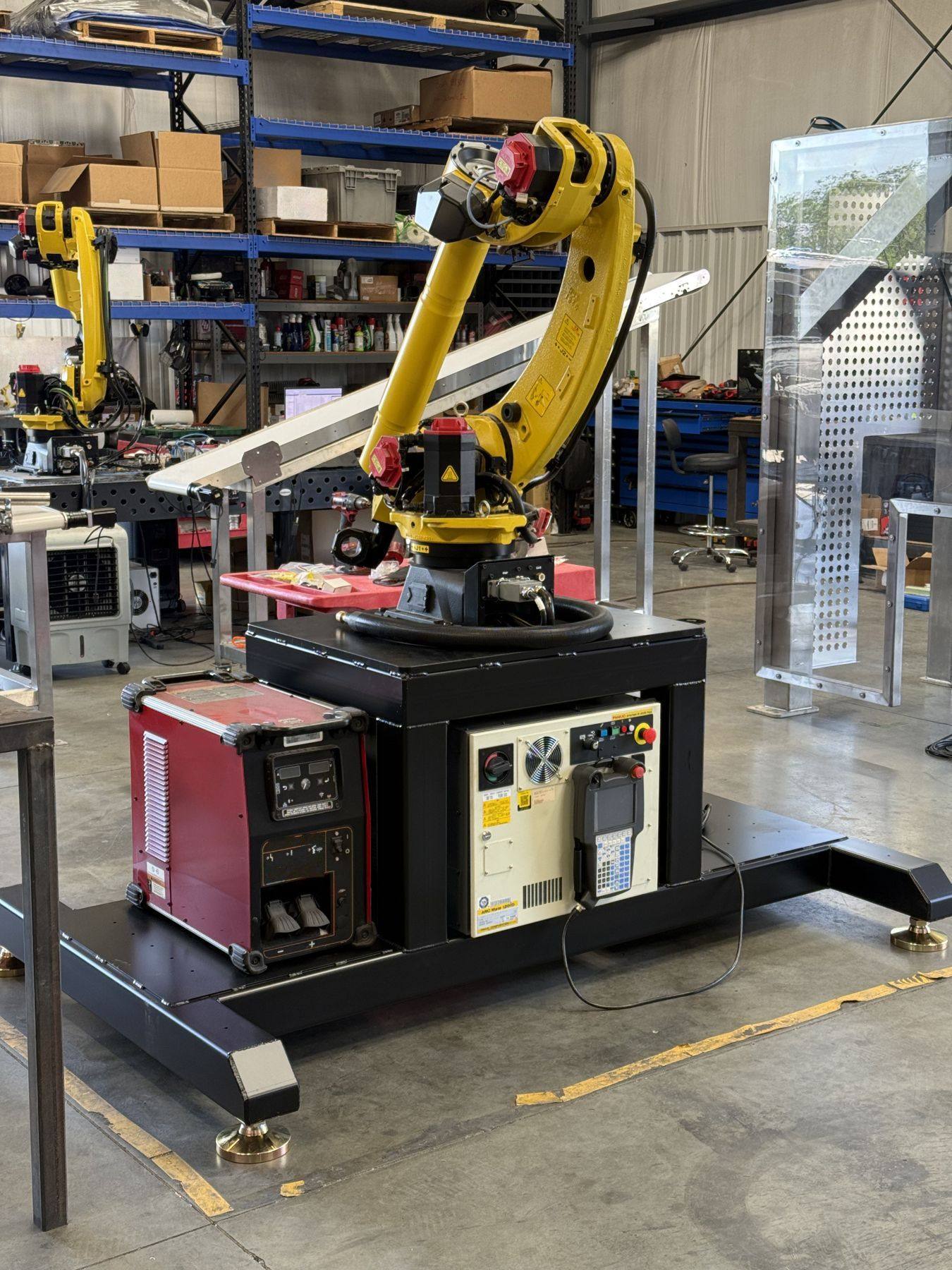
The plan we send with a concept is where the schedule starts, and the how we work page explains how the run-off and install dates firm up from there. Our guide to what stretches a robot project schedule lists the usual causes of a slip. Share them with your CPA early, and again if they move. For a calendar-year business, a slip past December 31 moves the deduction into the next tax year.
What counts toward the cost of the cell
Publication 946 says the basis of property you buy is its cost plus items such as sales tax, freight, and installation and testing fees, and that the cost includes what you pay in cash, debt obligations, other property or services. On a turnkey cell, most of the quote is that kind of cost: the robot, the tooling, the frame and guarding, the panel, the programming, and the install and commissioning.
What your CPA will want to look at closely is anything that might belong to the building, and anything billed apart from the equipment. Our robot cell cost breakdown walks through each line on a quote. Ask your CPA how they want the final invoice laid out before it is issued. Software included in the price of equipment without being stated separately is treated as part of the equipment, while separately stated software can be written off differently.
California does not follow the federal rules
California caps Section 179 at $25,000, and the cap shrinks dollar for dollar once the cost of qualifying property placed in service in the year passes $200,000. At $225,000 it is gone. California also does not allow federal bonus depreciation. So a cell written off in full on the federal return is still depreciated over several years on the California return, and in the year the cell goes in, the state deduction for it is much smaller.
Corporations have one more choice. The FTB’s instructions for Form 3885 let a corporation elect either the Section 179 expense or California’s own additional first-year depreciation under R&TC Section 24356 for a given year, but not both.
For the California sales tax side of buying a cell, see our guide to California incentives for a robot cell. Programs outside the tax code, such as training grants and SBA loans, are covered in our guide to grants and funding for automation projects.
Questions to take to your CPA
Before you sign the purchase order
- Section 179, bonus depreciation or both, given this year's business income
- Which dates they need: contract, start of the build, delivery or commissioning, and what records prove each one
- What changes if commissioning slips past December 31
- Which lines on the quote go into the cell's cost, and which could count as building work
- How the cell is treated on the California return, and what the gap does to your state tax
- Whether you file on a fiscal year, and which year's limits apply to you
- Whether financing or a lease changes who takes the deduction
Checking payback before the tax math
The robot ROI calculator works out simple payback from your own labor, scrap and running-cost figures. Run it on the price before tax first. It sits with our other planning tools. Then ask your CPA what the first-year deduction is worth to you in the year the cell goes into service.
Common questions
- Can we take the deduction in the year we pay the deposit?
- Not under the placed-in-service rule. Section 179 and bonus depreciation are both claimed in the tax year the cell is placed in service, so a deposit paid in 2026 on a cell commissioned in 2027 puts the deduction in 2027. For bonus depreciation, the contract and payment dates matter for a different reason: they set when the cell was acquired, which decides which percentage applies.
Sources
- IRS Rev. Proc. 2025-32, section 4.24: Election to expense certain depreciable assets, taxable years beginning in 2026
- IRS Publication 946 (2025), How to Depreciate Property
- IRS Notice 2026-11, interim guidance on the additional first year depreciation deduction under section 168(k) as amended by P.L. 119-21
- IRS news release IR-2026-06 (Jan. 14, 2026): Treasury, IRS issue guidance on the additional first year depreciation deduction
- California FTB: 2025 Instructions for Form FTB 3885A, Depreciation and Amortization Adjustments
- California FTB: 2025 Instructions for Form FTB 3885, Corporation Depreciation and Amortization
- 26 CFR 1.167(a)-14(b), Treatment of computer software
- The Tax Adviser (AICPA), Planning opportunities: Sec. 179 expensing vs. bonus depreciation (Dec. 2024)